Two brothers tell tales from detention
-
My brothers were detained from a checkpoint and subjected to months of
torture and ill-treatment without ever being classified as prisoners.
بصمات أصابع
-
حبيبتي
رُغم أننا في نفس القارب
نهاياتُ القصصِ أخذتْ تختلف
أسبقُكِ ربما
أو نُواصلُ معا
طرقٌ يتحسّسُ الجسدُ فيه
المزيدَ من الجسد
قصدتُ الأرميني العجوز في م...
Will US global hegemony last for another century?
-
My weekly article for Al-Akhbar: "Will US global hegemony last for anther
century"?
(A critical review of Michael Beckley's new book from Cornell Universi...
This blogname was derived from a satiric Arabic novel by the Palestinian Israeli Emile Habiby. In the ''The Secret Life of Saeed The Pessoptimist'' he uses absurdism as a weapon against the (ir)realities of daily life in Palestine/Israel. I consider it to be an example for how events in Israel/Palestine best can be approached.
The subtitle is from a book by Dutch author Renate Rubinstein. In a way that is also still my motto.
My real name is Martin (Maarten Jan) Hijmans. I've been covering the ME since 1977 and have been a correspondent in Cairo. In 2018, I concluded the study 'Arabic language and culture' at the University of Amsterdam.
I started 'Abu Pessoptimist' in January 2009 out of anger about the onslaught of that month in Gaza. The other blog, The Pessoptimist, is meant to be a sister version in English. (En voor de Nederlandstaligen: ik wilde in november 2009 een tweede blog in het Engels beginnen en ontdekte te laat dat als je één account hebt, een profiel dan meteen ook voor allebei de blogs geldt. Vandaar dat het nu ineens in het Engels is... So sorry.)
Human Rights Watch has called on authorities in the autonomous Iraqi region of Kurdistan to ban the practice of female circumcision. A report issued by the group on Wednesday said the practice was widespread in Iraqi Kurdistan. It called on the Kurdistan Regional Government (KRG) to enact legislation to ban the practice on young girls or unconsenting adult women. It also called on the KRG to launch a public awareness campaign on its damaging and dangerous consequences.
Female circumcision - a practice which has no basis in Islam although it is encouraged by some clerical authrities - is virtually unknown in the rest of Iraq, and it is not clear why it seems to have taken root in Iraqi Kurdistan, a deeply traditional and often tribal society. There are no comprehensive statistics, but a number of recent surveys have shown it to be surprisingly widespread.One survey carried out early last year by the KRG's Human Rights Ministry suggested that 40% of girls and young women had undergone the procedure in the Chamchamal area, between Kirkuk and Sulaimaniya. An earlier study by the German-Iraqi NGO Wadi in a broad area between Irbil, Sulaimaniya and Kirkuk yielded an even higher average figure of more than 70%.
Wow, after 18 months of investigations into the conduct of the Cast Lead operation in December-January of 2008-2009 during which more than 1400 Palestinians were killed, Israel may indict a third soldier for not behaving in a proper way, Ynet reports. The man, a sergeant of the Givati Brigade, is said to have opened fire at a group of 31 people who were fleeing an area where shots were fired and who were carrying white flags. The sergeant had not received orders to shoot. A mother of 64 and her daughter (35), both belonging to the Abu Hajjaj-family were killed as a result of his shooting. Israeli military prosecution has already submitted two earlier indictments against soldiers who participated in the Gaza operation – one for theft and illegal use of a credit card, the other for overstepping authority in a case where soldiers ordered a Palestinian child to open suspicious bags for them. Now a decision is expected on the most sensitive case.
Ynet tells us: About two months ago the military advocate told the soldier that before the case was decided he would be entitled to a hearing. However, the case was described as a "killing", indicating the advocate's intention to indict the soldier for a serious offence, though it is possible that a milder indictment may be submitted in the end. Because of the sensitivity of the case, the military police will be present during the hearing. Military sources said to Ynet that it is a complex case that requires thorough investigation. They noted that the case had been handled with no regard for the allegations in the Goldstone Report.
Goldstone? No God forbid, this was an Israeli investigation. And since it was a' complex' one, we have to understand that it took 18 months to reach this stage. Still it is unclear what kind of indictment will follow. For those who want to read about what happened: B'tselem published a testimony of Farhaneh Abu Hajjaj, one of the family members, in April 2009. It can be found here.
The late Palestinian poet Mahmoud Darwish has been honored with a square in his name in the city of Paris. It was the first time such a thing happend outside his homeland. The 'Place Mahmoud Darwish' was unveiled Tuesday by Paris mayor Bertrand Delanoe in the presence of PA-president Mahmoud Abbas and officials from the French Foreign Ministry, ambassadors from several Arab states, UNESCO, and French and Arab artists living in the city. Darwish himself lived in Paris on and off for years, traveling between the French city and Beirut during his years of exile. The sign of the new 'place' bears a line of Darwish: ''We love life if we find a way to it, '' which is taken from the following poem:
And We Love Life
And we steal from the silkworm a thread to build a sky and fence in this departure.
We open the garden gate for the jasmine to step out on the streets as a beautiful day.
We love life if we find a way to it.
And we plant, where we settle, some fast growing plants, and harvest the dead.
We play the flute like the color of the faraway, sketch over the dirt corridor a neigh.
We write our names one stone at a time, O lightning brighten the night.
We love life if we find a way to it...
(translated from the Arabic by Fady Joudah)
In April there was a ceremony in Paris whereby an esplanade was named after Ben Gurion. That drew angry protests from people who immediately called it the 'ethnic cleansing promenade'.
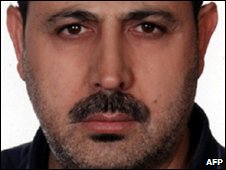
The Irish Republic is to expel an Israeli diplomat over the use of fake passports in the killing of Hamas official Mahmoud al-Mahboub in January in Dubai. Forged British, French, Australian, and German passports were also used in the Dubai operation.The UK and Australia have already expelled Israeli nationals over the forgeries.
Foreign Minister Micheal Martin said an investigation had proved that eight Irish passports used in the operation were forgeries. Mr Martin said in a statement that Israel had been "requested to withdraw a designated member of staff of its embassy" and that he expected the request would "be quickly acceded to. The misuse of Irish passports by a state with which Ireland enjoys friendly, if sometimes frank, bilateral relations is clearly unacceptable and requires a firm response," he said. In Jerusalem, foreign ministry spokesman Yigal Palmor said the Israeli government regretted the Irish decision, which he said was "not in line with the importance of our relationship with the Irish government".
Mr Martin said the Irish had co-operated closely with British and Australian authorities in their investigation of the killing. He cited "the inescapable conclusion that an Israeli government agency was responsible for the misuse and, most likely, the manufacture of the forged Irish passports associated with the murder of Mr Mabhouh". Irish authorities had asked for Israeli help in their investigation, he said, but such efforts had "yielded no response and no denial of Israeli involvement".
Six of the eight fake passports used the numbers of existing Irish passport holders, while the other two contained invented numbers conforming to the Irish format, the foreign ministry said.Mr Martin said those whose passport numbers had been used had been issued with new passports and that he was confident this would allow them "to travel free from any suspicion".
Last week it emerged that authorities in Poland arrested a suspected Israeli agent in connection with Mr Mabhouh's death.Germany is seeking his extradition over a forged German passport used by one of the killers.
The International Committee of the Red Cross wrote the following about the (health) situation in Gaza in its annual report which was published today:
The serious incidents that took place on 31 May between Israeli forces and activists on a flotilla heading for Gaza once again put the spotlight on the acute hardship faced by the population in the Gaza Strip. (..) The closure imposed on the Gaza Strip is about to enter its fourth year, choking off any real possibility of economic development. Gazans continue to suffer from unemployment, poverty and warfare, while the quality of Gaza's health care system has reached an all-time low. The whole of Gaza's civilian population is being punished for acts for which they bear no responsibility. The closure therefore constitutes a collective punishment imposed in clear violation of Israel's obligations under international humanitarian law.
Although about 80 types of goods are now allowed into Gaza – twice as many as a year ago –over 4,000 items could be brought in prior to the closure. Generally, the price of goods has increased while their quality has dropped – this is one consequence of the largely unregulated trade conducted through the tunnels that have been dug under the Gaza-Egypt border to circumvent the closure.
Fertile farmland located close to the border fence has been turned into a wasteland by ongoing hostilities, affecting people's livelihoods in many rural communities. The buffer zone imposed by Israel extends in practice over one kilometre into the Gaza Strip, covering a total area of about 50 square kilometres that is host to nearly a third of Gaza's farmland and a large share of its livestock. Agricultural activities in the area are hampered by security conditions. Israel's enforcement of the buffer zone and frequent hostilities have resulted not only in civilian casualties and the destruction of civilian property but also in the impoverishment and displacement of numerous families.
Gaza's fishermen have been greatly affected by successive reductions imposed by Israel on the size of the fishing grounds they are allowed to exploit. The latest restriction to three nautical miles has cut down both the quantity and quality of the catch. As a result, nearly 90% of Gaza's 4000 fishermen are now considered either poor (with a monthly income of between 100 and 190 US dollars) or very poor (earning less than 100 dollars a month), up from 50% in 2008. In their struggle to survive, the fishermen have little choice but to sail into no-go zones, at the risk of being shot by the Israeli navy.
"I have already been arrested and my boat has been confiscated several times," said Nezar Ayyash, who heads Gaza's fishermen's union. "But this is our life here. We know that fishing can cost us our lives, but we have no other choice but to go out with our boats: we need to feed our families."
Health-care
Gaza is suffering from an acute electricity crisis. The power supply in Gaza is interrupted for seven hours a day on average. The consequences for public services, especially the primary health-care system, are devastating. Hospitals rely on generators to cope with the daily blackouts.
The power cuts pose a serious risk to the treatment of patients – and to their very lives. It takes two to three minutes for a generator to begin operating, and during that time electronic devices do not function. As a result, artificial respirators must be reactivated manually, dialysis treatment is disrupted and surgery is suspended as operating theatres are plunged into darkness.
To make matters worse, fuel reserves for hospital generators keep drying up. Three times this year, fuel shortages have forced hospitals to cancel all elective surgery and accept emergency cases only. Gaza's paediatric hospital had to transfer all its patients to another facility because it could no longer function. Laundry services have repeatedly shut down. With the prospect of increased electricity consumption during the hot summer months when air conditioning is required, the situation is likely to deteriorate further if hospitals do not receive ample fuel.
Fluctuations in the power supply can also damage essential medical equipment. Repairs are difficult owing to the closure, under which the transfer into Gaza of spare parts for medical equipment is subject to excessive delays of up to several months.
The transfer of disposable electrodes, which are used to monitor the heart rhythm of cardiac patients, has been delayed since August 2009. Without this equipment, patient lives are at risk, as heart problems may not be detected in time. Because of the restrictions in place, most heart monitors in Gaza will be unusable by the end of this month. The run-down state of equipment is one of the reasons for the high numbers of patients seeking treatment outside the Strip.
Stocks of essential medical supplies have reached an all-time low because of a standstill in cooperation between Palestinian authorities in Ramallah and Gaza. At the end of May 2010, 110 of 470 medicines considered essential, such as chemotherapy and haemophilia drugs, were unavailable in Gaza. When chemotherapy is interrupted, the chances of success drop dramatically, even if another painful round of treatment is initiated. Haemophilia patients face life-threatening haemorrhages when compounds such as Factor VIII and IX are not available.
Al Jazeera English had this report on malnutrition of children
Israel's Defense Minister Ehud Barak canceled an official visit to Paris on Sunday 13 June, announcing he would stay in Israel while the government establishes an investigative committee to explore Israel's deadly naval attack on the Freedom Flotilla.
The announcement comes after French activists who were aboard the Gaza bound aid convoy threatened to bring charges against Barak over the raid that killed nine. The suit would be filed under the principle of universal jurisdiction, a principle that allows the prosecution of suspected war criminals in countries that have no direct connection with the events, in France and in the International Criminal Court in The Hague, according to the Associated Press. Three members of French parliament have also joined the effort.
"We must stop this bloody Israeli escalation and the only way is international judiciary. We want to stop Israel through punishing its leaders who partook in the operation. We will mainly target the leaders who gave the orders and those who executed them," said Lilian Glock, who represents the French activists.
Barak was set to dedicate a new Israeli booth at the Eurosatory arms fair, which opens in Paris this week.
"We believe it is unacceptable and unjust that the French government hosts Ehud Barak honoring him with official ceremonies after he claimed responsibility for the attack on our flotilla and the bloodshed," said Tomas Hud, one of the Freedom Flotilla activists.
A small French cinema chain also took action to protest the Freedom Flotilla attack. The Utopia art cinemas canceled screenings of the Israeli comedy "Five Hours from Paris" and replaced them with the documentary "Rachel," about an American student crushed to death by a bulldozer in 2003 while protesting Israeli house demolitions in Gaza. “Rachel” is a documentary made by Simone Bitton, a Moroccan-born, French-Israeli director who emigrated to Israel with her family as a child, served in the Israeli army, became a pacifist and mostly lives in France, wrote the New York Times. Bitton is also the director of “Wall,” a 2004 documentary about the Israeli Separation Wall that is dividing Palestinian communities and carving up land.
Polish authorities have arrested a suspected Israeli intelligence agent thought to have played a role in the Dubai assassination of a senior Hamas official, German prosecutors said Saturday.
The move apparently came at the request of Germany, which believes Mossad falsified one of its passports to enter the United Arab Emirates in advance of the alleged assassination of Hamas commander Mahmoud Al-Mabhoul in January.
"He was arrested in Warsaw and is suspected of being involved in illegally obtaining a [German] passport," Agence France-Presse quoted a spokesman for German federal prosecution as saying. "It's now up to the Poles to decide if they are going to hand him over to Germany," the spokesman said.
The announcement confirmed a report to be published Monday in the Berlin-based daily Der Spiegel that the Israeli suspect, Uri Brodsky, was arrested in early June upon arrival at Warsaw's airport on suspicions that he helped a member of the hit squad get a German passport in the summer of 2009.
The head of the Palestinian Ministry Of Detainees' Census Department , Abdul-Nasser Farawna, who is himself a former detainee, stated that Israel has arrested around 700,000 Palestinians since June 1967. That figure includes tens of thousands of children and over 10,000 women, IMEMC reported
Farawna also stated that 198 Palestinians died due to torture, medical negligence, while some of them were shot and killed by their arresting officers. Hundreds of detainees died after they were released due to health issues related to their arrest and torture.
The researcher added that the army does not target a specific segment of the society as the illegal arrests target women, children, elderly, students, lawyers, doctors and workers, and that most of the kidnapped Palestinians were tortured.
Approximately 420,000 Palestinians were kidnapped by the army in the period between 1967 and the beginning of the first Intifada in 1987. The number was 210,000 during the years of the first Intifada, between December 1987 and 1994. The arrests rate dropped after the Oslo peace agreement of 1994 until September 2000, as Israel conducted 1,700 arrests each year. But after the second Intifada started in late September 2000 until this day, the army carried more than 70,000 arrests with a rate of 7,000 arrests each year.
Farawna said that there are several factors that affect the increase or decrease in the numbers of arrests as the security situation, and the direct presence of the army in the Palestinian territories affects the number of arrests.
The Palestinian researcher further stated that 198 Palestinians died in Israeli prison, detention and interrogation centers. Most of the detainees died due to torture and lack of medical attention.
73 detainees (36.9%) died in the period between 1967 until December 8, 1987. 42 (21.2%) detainees died in Israeli prisons during the first Intifada in the period between December 8 and mid 1994. Eight detainees died in Israeli prisons in the period between 1994 until the second Intifada that started in September 2000.
75 detainees (37.9%) died during the al-Aqsa Intifada. 50 of them died having not received adequate medical attention in Israeli prisons, and 7 died due to excessive use of force against them in prisons; this includes the army’s use of lethal fire against them in prison.
These figures do not include hundreds of detainees who died after they were released as they became sick in prison. Farawna further stated that arrests are still ongoing, and the conditions in Israeli prisons are becoming worse than before, while the number of sick detainees is increasing, including dozens who have serious diseases and health conditions. Furthermore, Farawna said that the violations against the detainees are escalating, and voiced an appeal to human rights groups to intervene in order to put an end to the ongoing violations carried out by Israel against the detainees and their internationally guaranteed rights.
Henry Siegman, (Henry Siegman again), in Haaretz
about the attack on the Mavi Marmara and Israels reactions.
Of course, even the most objectionable Israeli policies do not begin to compare with Hitler’s Germany. But the essential moral issues are the same. How would Jews have reacted to their tormentors had they been consigned to the kind of existence Israel has imposed on Gaza’s population? Would they not have seen human rights activists prepared to risk their lives to call their plight to the world’s attention as heroic, even if they had beaten up commandos trying to prevent their effort? Did Jews admire British commandos who boarded and diverted ships carrying illegal Jewish immigrants to Palestine in the aftermath of World War II, as most Israelis now admire Israel’s naval commandos?
Who would have believed that an Israeli government and its Jewish citizens would seek to demonize and shut down Israeli human rights organizations for their lack of “patriotism,” and dismiss fellow Jews who criticized the assault on the Gaza Flotilla as “Arabs,” pregnant with all the hateful connotations that word has acquired in Israel, not unlike Germans who branded fellow citizens who spoke up for Jews as “Juden”? The German White Rose activists, mostly students from the University of Munich, who dared to condemn the German persecution of the Jews (well before the concentration camp exterminations began) were also considered “traitors” by their fellow Germans, who dared to condemn the German persecution of the Jews (well before the concentration camp exterminations began) were also considered “traitors” by their fellow Germans, who did not mourn the beheading of these activists by the Gestapo.
So, yes, there is reason for Israelis, and for Jews generally, to think long and hard about the dark Hitler era at this particular time. For the significance of the Gaza Flotilla incident lies not in the questions raised about violations of international law on the high seas, or even about “who assaulted who” first on the Turkish ship, the Mavi Marmara, but in the larger questions raised about our common human condition by Israel’s occupation policies and its devastation of Gaza’s civilian population. (See the link on tip for the whole article)
Workers sit in protest in front of the Shura Council.
Approximately 650 workers from the Arco Steel company in Sadat City, Monufiya, continued their strike for the eighth consecutive day to protest the alleged breach, by the company's managing director, of a contract signed in April, the Egyptian paper El-Masry el-Youm reports. The workers claim the contract stated their allowances would be raised. The workers are also protesting what they describe as arbitrary decisions to transfer certain workers and turn them from technical workers into phone operators.
The workers denied meeting with a delegation from the manpower ministry and said they will continue their strike until they meet with Minister of Trade and Industry Rachid Mohamed Rachid and Minister of Investment Mahmoud Mohie Eddin, until all their demands are satisfied. If those demands are not satisfied, they said, they would go on hunger strike.
Meanwhile, 20 workers form the United Sugar Company of Egypt continued their sit-in for the fourth day to protest what they describe as arbitrary dismissal from work.ِSome of the workers said the company had attempted to force them to submit their resignations. They said the management had already dismissed 24 workers, pushing them to file lawsuits in court against the company. They said they would not end their protest until they get their jobs back.
In Luxor, 56 owners of souvenir stores in western Luxor continued their sit-in for the second day, as well as a hunger strike at Qarna hospital, to protest a decision that increased their monthly rent from LE350 to LE385.
In Aswan, workers at the governorate's cleaning company went on strike, and 70 of the company's workers, technicians and drivers gathered in front of the city council to protest deductions from their salaries. Some of the workers assembled in front of the administrative prosecution office and refused to return to work.
In Daqahliya, workers and employees at Mansoura University Hospital suspended their strike yesterday after security forces put pressure on department heads to prevent workers and employees from participating in the strike, which began last Wednesday.
A court in Cairo has upheld a ruling urging the government to consider stripping Egyptian men who are married to Israeli women of their citizenship.The ruling requires officials to send all such cases to the cabinet, to be decided on an individual basis. The interior ministry had appealed against the original ruling, made by a lower court last year.The new decision is seen as a sign of negative feeling towards Israel in Egypt, despite a 1979 peace treaty. It calls on the cabinet to determine whether to remove the nationality of the men concerned, as well as that of their children.The court said the government should consider whether the Israeli woman was an Arab or a Jew.
It is estimated that about 30,000 Egyptians are married to Israeli women.
The lawyer who brought the case, Nabih el-Wahsh, said it was aimed at protecting Egyptian youth and Egypt's national security.He says that offspring of marriages between Egyptian men and Israeli women should not be allowed to perform military service.There should not be a new generation "disloyal to Egypt and the Arab world", he said.
The appeal was sent by the government after a verdict last year stated the 1976 article of citizenship law should be implemented. That law requires the stripping of citizenship of those who married Israelis who have served in the army or embraced Zionism.
Negad al-Borai, an Egyptian lawyer and a human rights activist, said he was "surprised" by the verdict and that the government was sending out mixed messages about Israel."The president congratulates Israel's president in national holidays yet it punishes the people for having relationships with Israel," he told Reuters news agency."Egyptian law says citizenship can only be revoked if the citizen is proven to be spying on his country, and this verdict considers marrying an Israeli an act of spying".
About 200 people have taken part in a protest in Belfast against the Israeli seizure of an Irish aid ship trying to break the blockade of the Gaza Strip.Irish Deputy First Minister Martin McGuinness described the Israeli intervention as a "raid" and said it was a "completely unacceptable and unjustified use of force".
"The Rachel Corrie should have been allowed to proceed to Gaza without Israeli aggression," he said.
"This is an attack on an Irish flagged vessel and it demands a strong response by the Irish government."
Mary Hughes, one of the founders of the Free Gaza movement, which has been organising aid shipments, condemned Israel's actions.She added: "We are totally outraged that they have once again gone into international waters and violently boarded the boat, and force people to go to Israel when all we wanted was to be left to get to Gaza." Several thousand people demonstrated in Paris on Saturday to show solidarity with the Palestinians and denounce the Israeli raids on aid boats bound for Gaza, with some Jews participating alongside Muslims. Protesters gathered in the Bastille area, in a rally which included Palestinian flags and one banner saying "French Jewish Union For Peace" with around 100 French Jews following it. It was not clear just how many were there in total.
In London, thousands of protesters wearing t-shirts with slogans like "Free Gaza" converged outside the prime minister's official residence at Downing Street, before staging a noisy march to the Israeli embassy.
Demonstratie in Istanbul.
Thousands of people on Saturday took to the streets of Istanbul, burning Israeli flags and branding the country a "murderer" over its deadly raid on Gaza-bound aid ships. The crowd, numbering about 10,000, gathered at the Çağlayan square on the European side of the city at the call of the Humanitarian Relief Foundation, or İHH, one of the key organizers of the aid flotilla to the Gaza Strip."Murderer Israel!" chanted the demonstrators, at times breaking into shouts of "Allahu Akbar!" or "God is great." The crowd also expressed support for the Palestinian Islamist movement Hamas, which controls the Gaza Strip, chanting "We are all soldiers of Hamas!"
Alexandria on Friday. (Picture Al Masry al-Youm, Tareq el-Farmawy).
In Cairo there were also protest rallies, but the biggest Egyptian protests took place on Friday. That day Egypt's mosques were packed with thousands of demonstrators after the noon prayer on Friday, protesting the killing of activists on board the Freedom Flotilla by Israeli forces. The largest demonstration occurred in Alexandria, where more than 20,000 protesters, including members of various professional syndicates, members of the Muslim Brotherhood and representatives of opposition parties, gathered in front of the Qaid Mosque and chanted slogans in support of the Palestinians.
In the Governorate of Gharbiya, more than 15,000 demonstrators gathered in the cities of Kafr el-Ziat, Basyoun, Qatur, Samnud, el-Mahala, Tanta and Zifti. The demonstrators burned the Israeli flag and demanded the expulsion of the Israeli ambassador from Cairo, in addition to calling on the religious authorities to sanction a holy war against Israel. Crowded demonstrations also occurred in Arish, Sharqiya, Damietta, Aswan and Assiut. In Tel Aviv leftist and rightist demonstrators clashed Saturday night as more than 6,000 Israelis gathered to protest the Israeli raid on a Gaza-bound aid ship earlier this week, in which nine pro-Palestinian activists were killed.he protest was originally planned by to mark the anniversary of the Six Day War which broke out 43 years ago today. Among the organizers were left wing parties Meretz, Hadash and Peace Now organization. The demonstrators carried banners saying "The government is drowning us all," "We must stride for peace," and "A right wing government = clear and immediate danger to state security." As the demonstrators marched from the Rabin Square near the city's municipal building toward the Tel Aviv museum several hundred rightist demonstrators followed the procession. Upon their arrival at their final destination the spirits heated up between the two opposing groups, during which they two sides cursed and shouted at each other.


.jpg)