Showing posts with label settlements. Show all posts

Monday, January 4, 2016

Israel destroys two homes of families of Palestinian attackers in Jerusalem


Israeli forces on Monday demolished the family home of a Palestinian attacker killed in October and sealed off the home of another attacker's family with cement, the families told Ma'an.
The homes, in the Jabal al-Mukabbir neighborhood of East Jerusalem, belonged to relatives of Alaa Abu Jamal and Baha Elayyan who were both shot dead on Oct. 13 after carrying out separate attacks that left four Israelis dead. The Israeli authorities have been holding the bodies of Alaa Abu Jamal and Baha Elayyan since they were shot dead in another controversial Israeli practice that has been seen by some as further raising tensions.
Israeli forces reportedly stormed the homes and ordered the families to evacuate them before they proceeded with the demolitions. Abu Jamal's family told Ma'an that Israeli forces sealed with cement the home of Safa Abu Jamal, Alaa's sister, after claiming to have secret information that it belonged to her slain brother.The home consisted of one floor and three apartments. It was inhabited by Safa, her husband, and their two children.

Monday, December 28, 2015

Peace Now: Israeli ministry of Housing has plans for 55.548 new houses in occupied territory

A new report by Peace Now  reveals that the Israeli ministry of Housing is planning to build 55.548 new houses, to  construct two new settemenets, to legalize at least six so called ''illegal''settlements and to start building in the so called E1 area which will split the West Bank in two.

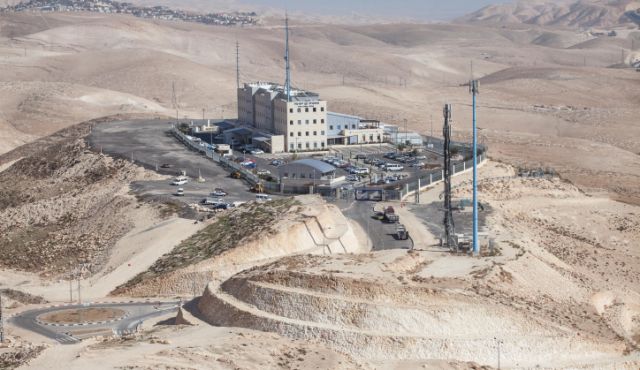
 http://lawanddisorder.org/wp-content/uploads/E1Police.jpg 
 E1 as it is now: only the police headquarters is standing,

Summary and Main Findings:
In November 2013, following international pressure, Prime Minister Netanyahu cancelled three tenders issued by the Ministry of Housing (MOH) calling for architects to bid for contracts to plan tens of thousands of housing units in settlements, including in E1. One year later, far from the public eye (without any public tender), the MOH hired architects to plan many of those plans. This planning, which contradicts any possible commitment to a two-state solution, continues through the present day.
In July 2013 Peace Now contacted the MOH, asking that it disclose its list of projects in the settlements since 2012, pursuant to the Freedom of Information Act. Only after Peace Now petitioned to the court, requesting that it compel the MOH to disclose the information, did the MOH revealed partial information: 200 pages with tables containing over 1,000 lines of data. This data, together with other sources, reveal that the MOH is working on projects in settlement valued at over 330 million NIS.
Download the full report here

Wednesday, December 16, 2015

Israel approves 891 new houses in Gilo, a neighborhood of Jerusalem on Arab lands

Gilo, seen form the Palestinian city of Bethlehem. 

The Jerusalem building and planning board on Wednesday approved a plan to construct 891 housing units in Gilo, a settlement (neighborhood of Greater Jerusalem) on Palestinian land. Three weeks ago, the plan was pulled at the last minute, fearing a sharp American reaction during Prime Minister Benjamin Netanyahu's visit to the United States. The plan for the southern slope of Gilo, in East Jerusalem, was given initial approval in late 2012. The plan involves private land.
Ir Amim, an organization advocating Jewish-Arab equality in the capital, condemned the step.
“The behavior of Netanyahu and his government concerning approval of the plan on the slopes of Gilo is another example of the cat and mouse games the Israeli government plays with the Americans regarding building in East Jerusalem," the group said. "Continued unilateral steps, such as this, will only deepen the crisis that Israel is descending toward in lieu of a diplomatic agreement and will destroy any chance of reaching a real and just solution in Jerusalem.”

Thursday, February 26, 2015

The Netanyahu-government in 2014 produced 460 new houses monthly in occupied territory

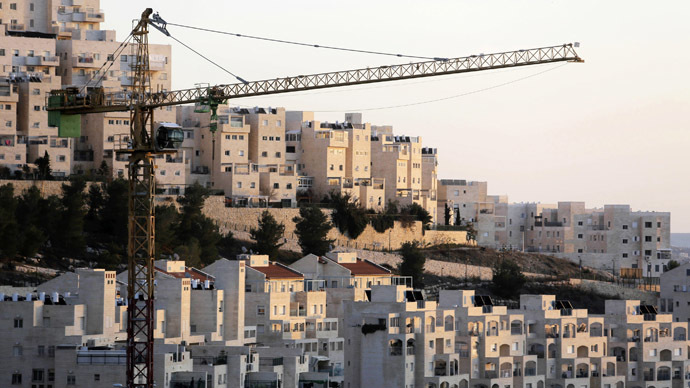
A crane is seen next to homes in a Jewish settlement near Jerusalem known to Israelis as Har Homa and to Palestinians as Jabal Abu Ghneim (Reuters/Ammar Awad)
Har Homa (Jabal Abu Ghneim) near Jerusalem. (Photo Reuters) 

The Israeli organzation Peace Now reports:
Summary of the third Netanyahu government: A substantial increase in construction starts, planning and tenders – specifically in isolated settlements and the most disputed areas in terms of the chance for two states.
A.  Construction Starts - 40% increase in construction starts. 68% of the new construction is in settlements east of the outline proposed by the Geneva Initiative, the areas most challenging for the two-state solution.
B.   Tenders– A decade’s (at least) record of tenders in the settlements and East Jerusalem.  Tenders for 4,485 residential units were published in 2014 alone.
C.   Plans – The third Netanyahu government promoted an average of 460 residential units per month, mainly in isolated settlements, double the number promoted by the previous government.

Thursday, June 26, 2014

State of Palestine praises France, Germany and the UK for their warning against dealing with settlements

The Palestinian ministry of Foreign Affairs welcomed Thursday publications on the websites of the foreign ministries of France, the UK and Germany, which warned against the legal and economic consequences of investing in the Israeli settlements, since that is illegal under international law. The Palestinian ministry called the Europeans ''balanced'' and said it is in line with the European guidelines, effective since 1 January 2014, on settlement construction and settlement products, as well as with international law.
“This is evidence to the European officials’ understanding and recognition of the dangers of settlement construction in the Occupied Palestinian Territory, including East Jerusalem, and its catastrophic consequences on peace opportunities and on the potential of a viable, contiguous State of Palestine,” the Palestinian ministry said in an official statement. ''This means the world is not deceived by the Israeli propaganda.” The ministry considered the European position towards settlements and their products an indicator of the “increasing international isolation” of Israel, since it is “committed to occupation, settlement and failure of negotiations.”
It called upon the European Union member countries to adopt this stance and to take the necessary legal procedures capable of putting an end to Israel’s settlement policies, so that Israel will realize it will be held accountable and punished for its ”aggressive” practices and for failure of negotiations.

Monday, April 14, 2014

Palestinians shoot and kill settler near Hebron


Palestinian gunmen shot and killed one person and injured two others in a car driven by an Israeli settler in the occupied West Bank on Monday, Israel's military said.
The Palestinians shot at the car in Tarqumiyah near Hebron in the West Bank, killing one person and injuring two passengers, according to Israeli news reports. The victims were in their vehicle at the time of the shooting. A 40-year-old man, presumably the father, was pronounced dead, while the mother was in serious condition, and the child suffered only light injuries, Channel 2 reported.
 The attack is understood to have targeted several vehicles, Ynet reports. The Israeli army launched a search of the area in the wake of the attack. Troops surrounded Idhna, suspecting that the gunmen came from the village. Palestinian sources said that large numbers of troops had set up roadblocks at the entrances to Palestinian villages in the Hebron area.

Thursday, January 16, 2014

Netanyahu wants to retain a fourth settlement bloc in negotiations with Abbas

 
Construction in Beit El in February 2013 (Activestills.org). 

According to a report Thursday on Army Radio, Netanyahu has been seeking to define a fourth bloc of Israeli settlements in the West Bank, in the vicinity of Beit El, that Israel would retain in any future agreement with the Palestinians.
The report, which cited an unnamed senior Israeli official involved in the negotiations, harked back to previous reports that the Israeli negotiating team has brought up the option of renting or purchasing land from the Palestinian Authority. The older reports did not specify which swaths of land Israel would seek to retain.
The Prime Minister’s Office declined The Times of Israel’s request for comment.
Located near the Palestinian administrative capital of Ramallah, the Beit El bloc joins three other West Bank areas — the Gush Etzion, Ma’aleh Adumim and Ariel blocs — over which Israel wishes to retain control, even after the signing of a peace agreement. In peace proposals that have been under discussion in the past, , it was proposed that Israel swaps land of an equal proportion to compensate the Palestinians for these territories.
The three blocs, together with the Beit El area, constitute a combined 13 percent of the West Bank.
Netanyahu wants to annex the four blocs but, according to the Israeli source, at this stage opposes compensating the Palestinians with a land swap of equal size and quality. The source added that the Palestinians had rejected the idea that Israel buys or leases some of the lands on which the settlement blocs rest. 

Saturday, January 11, 2014

Israeli settlements in Jordan Valley suffer from BDS

APTOPIX Mideast Israel Boycott Hits Home
A Thai worker sits in a back of a truck load with flowers in the fields of the West Bank Jordan Valley Jewish settlement of Petsael. (AP).

NETIV HAGDUD, West Bank (AP) — An international campaign to boycott Israeli settlement products has rapidly turned from a distant nuisance into a harsh economic reality for Israeli farmers in the West Bank's Jordan Valley.
The export-driven income of growers in the valley's 21 settlements dropped by more than 14 percent, or $29 million, last year, largely because Western European supermarket chains, particularly those in Britain and Scandinavia, are increasingly shunning the area's peppers, dates, grapes and fresh herbs, settlers say.
"The damage is enormous," said David Elhayani, head of the Jordan Valley Regional Council, which represents about 7,000 settlers. "In effect, today, we are almost not selling to the (Western) European market anymore.
Israel has played down the impact of the campaign of boycott, divestment and sanctions launched by Palestinian activists in 2005 to pressure Israel to withdraw from occupied lands.

Friday, January 10, 2014

Israel announces plans for almost 1.900 new housing units in occupied territory


Part of the settlement of Efrat, in the background the Palestinian village of Khirbet Abdullah Ibrahim (Reuters)  

Israel announced plans on Friday to build almost 1,900 new settler homes in the West Bank and East Jerusalem, settlement watchdog Peace Now said. The housing ministry announced the plans for 1,076 units in annexed East Jerusalem and 801 in the occupied West Bank, Peace Now spokesman Lior Amihai told AFP. Together the plans amount to 1877 new units. 
Last Monday Israel already announced plans for the construction of 272 new housing units in occupied territory. All in all this come down to 2149 units.
The paper Haaretz precises that tenders were released for the construction of 600 housing units in the settlement of Ramat Shlomo, a satellite of East-Jerusalem. In addition, also tenders were published for the construction of 532 units in other parts of East Jerusalem: 182 units in Pisgat Ze'ev, 294 in Ramot and 56 in Neve Yaakov. These last plots were marketed in the past but found no buyers at the time. They were now put back out on the market.
As for the West Bank the plans consisted of 227 housing units in Efrat, 78 in Alfei Menashe, 86 in Karnei Shomron, 40 in Ariel, 75 in Adam, 24 in Beitar Illit, 102 in Immanuel and 169 in Elkana.

Tuesday, August 13, 2013

Just before 'peace talks' Israel announces for 3rd time in a week building plans in occupied territory


Israel's Interior Ministry gave final approval on Monday to a plan to build 942 new apartments in Gilo, a settlement neighborhood beyond the Green Line in southern Jerusalem, just one day before Palestinian leadership is slated to make a final decision on whether to attend Wednesday’s scheduled negotiating session.
It was the third time in a week just before the restart of the peace negotiations that Israel made public large new building plans in occupied territory. The timing, this shortly before the restart of the negotiations with the Palestinians, cannot be a coincidence, one is led to think. On Sunday the Israeli  Housing Ministry announced plans to publish tenders for 394 housing units in the West Bank settlements of  Ariël, Beitar Illit and Efrat, plus 793 in East Jerusalem, including an additional 400 in Gilo. Last  Thursday the military administration of the West Bank gave the green light for almost 1.100 new houses in several settlements, including a settlement 'outpost', Nahlei Tal, that thereby de facto was 'legalized'.   . 
The last announcement is bound to put the peace negotiations between Palestinians and Israel, that are to begin on Wednesday in Jerusalem, further in jeopardy. On Monday Palestinian President Abbas consulted with senior Palestinian Authority officials on how to respond to the announcement Israel made on Sunday, issuing new tenders for construction in East Jerusalem and the West Bank. Haaretz reports that Palestinian sources said Abbas also discussed the issue with Martin Indyk, America’s special envoy for the talks, as well as other Western diplomats, including German Foreign Minister Guido Westerwelle, with whom he met in Ramallah. A senior Palestinian official said the dominant view among the Palestinian leadership is that there’s no place for resuming negotiations with Israel in light of the continued construction in the settlements. Abbas, however, on Monday seemed still determined to go on with the talks.

The plan approved by the Interior Ministry on Monday, known as Gilo – Southern Slopes, is one of the largest building plans Jerusalem has seen recently. It won final approval from the regional planning and building committee in December, but the developers then sought to make several changes in the plan. About a month ago, ministry planning officials approved the revised plan, and on Monday, the ministry finally signed off on it and allowed it to be published.According to Haaretz it pushes the boundary of the city (which was illegally fixed by Israel in 1968) further south, towards the Palestinians community of Beit Jala.  
Sources within the regional planning committee said the long lapse between the panel’s approval of the plan in December and the ministry’s final approval on Monday was due to pressure from the Prime Minister’s Office, which sought to delay the plan for fear of diplomatic pressure on Israel.


Thursday, August 8, 2013

Israel in a show of its peaceful intentions, is building 1096 new houses in the settlements

tel-tzion.jpg
Kochav Yaakov: 38 new houses retroactively approved.

The higher planning committee of Israel's Civil Administration (the misleading name for the military administration of the occupied West Bank) met yesterday (7-8-13) to discuss the promotion of 1096 housing units, divided into 21 plans inside 11 settlements, the NGO Peace Now  reports. The newspaper Haaretz tells us that that planning was temporarily frozen due to the efforts of the US Secretary of State Kerry to get Israel and the Palestinians at the table again. But apparently, now that Kerry succeeded, it is again business as usual.

Peace Now reports that the plans also include 'the legalization of an outpost'(i.e. a settlement that even under Israeli law was illegal).  The outpost in question is Nahlei Tal, established in 2012) ( and first reported by Peace Now ). The plan for Nahlei Tal includes 225 housing units. Currently there are merely a half dozen illegal mobile homes. This is a massive expansion of this illegal outpost, de-facto creating yet another new settlement. (The Israeli government did something similar in April 2012 concerning the illegal outposts Bruchin, Sansana and Rechalim).
Peace Now calls the location of the 1096 plans 'alarming', as only one of the settlements that is on the list to receive additional units is inside the separation barrier (which means that it falls in the terms for 'a land swap' during talks with the Palestinians). Seven others are east of the barrier and three are within the planned route of the barrier.
The settlement of Shiloh gets 95 new residential units on a site in a southern neighborhood that now holds chicken coops. The settlement Talmon gets 304 new houses in northern neighborhood of Zayit Raanan, some of which are retroactively approved. There are about 30 buildings in that neighborhood at present, only 10 of them legally constructed. In Kokhav Yaakov a plan for 38 residential units was retroactively approved, and on Kibbutz Gilgal in the Jordan Valley another 78 units have been added to the 156 already in place. In Almog, which is near the Dead Sea, 31 units were approved, and in Alon Shvut in Gush Etzion a plan for 60 units was advanced.  Several of these plans were intended to be discussed last month, at the previous meeting of the HPC, (17-7-13). However, press coverage of these plans and the HPC's agenda for the meeting, pushed the HPC to remove these plans from the agenda. The plans formerly removed but, promoted yesterday are for 234 units in Gilgal, 38 in Kochav Yaakov, 31 in Almog and 17 in Shilo.
 Of the 1096 housing units, 949 were discussed for depositing and 147 for validation.   

Monday, August 5, 2013

Israeli cabinet puts some 20 settlements on list of communities that will receive extra benefits

 A picture taken on April 24, 2012 shows the Jewish outpost of Bruchin, near the West Bank city of Nablus
 The recently 'legalized' settlement of Bruchin near Nablus was one of the places that is to receive exta benefits.  

The Israeli cabinet on Sunday approved a new map of national priority areas, which includes an additional 20 West Bank settlements and communities inhabited by former Gaza settlers.The list of national priority areas features hundreds of towns and villages that are entitled to government benefits in housing, infrastructure, education, culture and security. The list was last updated in 2009 to include dozens new West Bank settlements.
Fifteen out of 20 communities to receive national priority status are strongholds of Habayit Hayehudi, one of the coalition partners and the party of minister of Economy aftali Bennett. Conversely, two orthodox  communities have been removed from the list. The Israeli government denies, however, that the decision is politically motivated, it claims that the reason for including settlements on the list has to do with security.
Four ministers abstained in Sunday's vote, including Justice Minister Tzipi Livni and Environmental Protection Minister Amir Peretz of the Tenuah party. They blamed the government for promoting a partisan agenda at the expense of a national one."It is unacceptable that [northern Negev towns] Kiryat Gat and Kiryat Malachi are not on the list due to so-called proximity to the center, despite their difficult socioeconomic state, and at the same time include remote settlements, that were until recently illegal outposts, under the guise of 'security needs,'" Peretz said.
Some of the newly prioritized communities are outside the large settlement blocs, like Eshkolot and Negohot in the southern Hebron Hills. Other settlements on the list include Rehelim, Sansana and Bruchin, which were considered illegal outposts until several months ago, but were legalized by the cabinet before the last elections. Other settlements on the list are the West Bank settlements of Nofim, Geva Binyamin, Ma’aleh Michmash and Elon Moreh.
Several communities populated by former Gaza Strip settlers, who were evacuated from their communities in 2005, were also added to the list. These are Be’er Ganim, Bnei Dekalim, Ganei Tal, Netzer Hazani and Nitzan.

Friday, February 1, 2013

Ehud Barak pushes through another 346 houses in Gush Etzion settlements, outside 'security barrier'

 Gush Etzion settlement Nokdim.
The settlement Nokdim. (Wikimedia)

The Defense Ministry has advanced plans to build 346 housing units in the West Bank’s Gush Etzion region, area council head Davidi Perl reported on Thursday. The plans for 200 new homes in Tekoa and 146 in Nokdim were pushed forward a few weeks ago, but he and the council only publicized the information on Thursday, he said. The news broke at the same time that the UN Human Rights Council lifted its embargo on a report condemning Israeli settlement building and calling on Israel to withdraw from the West Bank.
Israel considers Gush Etzion to be a settlement bloc that will remain part of the country in any final-status agreement with the Palestinians for a two-state solution. But the Nokdim and Tekoa settlements are located in the eastern part of that region, outside the boundaries of the security barrier.

Earlier this month, the Construction and Housing Ministry issued tenders for 114 apartments in the Efrat settlement, also in Gush Etzion. It also issued tenders for 84 units in the Kiryat Arba settlement adjacent to Hebron, right outside Gush Etzion. This follows a December decision to advance plans for 523 homes in a new neighborhood of Gush Etzion’s Alon Shvut settlement known as Gevaot.
Hagit Ofran of Peace Now said that Barak had advanced plans for more than 8,000 units during his tenure in office. He has now chosen to leave his job, by pushing forward another harmful set of plans in isolated settlements beyond the security barrier, she said. “It’s a testimony to his true legacy as defense minister,” she declared.

Tuesday, January 15, 2013

Making sense of Israels recent building plans in occupied territory

Israel’s defence ministry has published plans for 170 new housing units and another 84 guest rooms in the West Bank settlement of Rotem in the Jordan Valley, anti-settlement activists said on Sunday.
The settlement itself previously received government approval, but no building plan was set out, according to Hagit Ofran of the Peace Now organisation.
“Last week it was deposited for public review. It is talking about 200 units, 30 of them are already built. In addition, another 84 units are proposed for guest rooms,” she said.
“It will be deposited for 60 days for the public to file objections. After all objections are collected and heard, the planning committee will decide whether to approve or refuse the plan. Usually they approve it.”

 
 Building in Ramat Shlomo (Jerusalem)

The Israeli government has moved forward aggressively in recent weeks with settlement construction plans in east Jerusalem and the West Bank, prompting angry condemnation from the Palestinians, and international criticism. The developments can be confusing for those who try to keep track of the Israeli activity in settlements. So many plans and approvals, some of which lethal for the two state solution, make it clear that the Government of Netanyahu decided to push forward as many approvals as possible in order to set facts on the ground before the elections in Israel, as long as they don’t feel a “threat” of any renewal of the peace process. In order to make sense of them, Peace Now made a list:

Following are details of recent developments:
1. E1 and 3,000 new tenders
2. Plans for 6,600 units in East Jerusalem
3. Givat Hamatos
4. Tenders for 1,216 units the West Bank and East Jerusalem 
5. Gevaot: a new city South-West of Bethlehem is approved.


1) E1 and 3,000 new tenders - Following the UN resolution on a Palestinian state, the Government of Netanyahu announced the intention to promote the planning in E1 and to issue 3,000 tenders in settlements and in East Jerusalem. On December 5th, the plans for the construction of 3,426 units in E1 were approved for depositing. See more here: Everything you need to know about E1

2) Plans for 6,600 units in East Jerusalem – in parallel, almost all of the main pending plans in East Jerusalem were promoted. Using a fast track of the planning process, the planning committee in Jerusalem approved plans in Givat Hamatos, Ramat Shlomo and Gilo.
See more details here: http://peacenow.org.il/eng/PlanningStrikeEastJerusalem

3) Givat Hamatos – Givat Hamatos is a plan that if built, might prevent the territorial continuity between Bethlehem and the Palestinian neighborhood of Beit Zafafa in South Jerusalem, and thus might prevent the possibility for a two state solution with a Palestinian capital in East Jerusalem.
The plan in Givat Hamatos is divided into 4 plans (A, B, C and D). The largest and the most lethal of them is Givat Hamatos A, for 2,610 units, got the final approval from the local planning committee on Wednesday (the 19th of December). The Regional planning committee have surprisingly rejected today plan C. However, unfortunately the rejection does not prevent the damage of the other plans. See more here.


4)  Tenders for 1,216 units in settlements – Yesterday, December 19th, the Ministry of Housing published the list of upcoming tenders that will be issued in the next few months, including 1,216 units in settlements and in East Jerusalem. These are part of the 3,000 units announced by the Government following the UN bid and include: 398 units in Beitar Illit; 108 in Karnei Shomron; 167 in Efrat; 102 in Imanuel; 167 in Givat Ze’ev; 106 in Adam (AKA Geva Binyamin); and 168 in Har Homa. Usually it takes a few months to a year from the issuing of the tender till the construction on the ground begins. See maps and full details here.

5) Gevaot: a new city South-West of Bethlehem - The Minister of Defense approved the promotion of a plan to build 523 units in a new settlement called Gevaot, South-West of Bethlehem. This is part of a larger plan to create a city of 6,000 units in an isolated area at the Gush Etzion settlement bloc. This is not a final approval of the plan it allows the promotion and depositing of it and within a year or two to even start the construction. See details and a map here.


'Working in settlements not profitable for Palestinian workers'

Palestinians are often employed to build houses in the settlements
Israeli and international companies that face criticism owing to their activities in the occupied West Bank often attempt to legitimize their businesses in settlements by claiming that they provide labor to Palestinian workers. These claims are just empty words, as the organization Who Profits, a research project by the Coalition of Women for Peace, that monitors the activities of Israeli and international firms which operate in the West Bank, makes clear in a recent report. 
Gross violations of labor rights are common in the West Bank because the Israeli labor regulations,  are rarely enforced in the Occupied Territories, and the workers cannot demand these rights for fear of losing their permits, Who profits reports. In order to work in settlements, Palestinians must obtain work permits from the Israeli Civil Administration, which also entails the approval of the Israeli internal security service (the Shin Bet). This permit can be annulled at any time, especially when workers demand their rights or try to unionize, or if they (or one of their family members) engage in any kind of political activity. This situation exposes Palestinian workers to extortion by the Israeli internal security service.
Israeli employers of Palestinians in settlements have a clear economic interest in maintaining the occupation of Palestinian land and the exploitation of resources, says Who Profits. Companies establish factories in the occupied West Bank mainly in order to enjoy low taxes ad other economic benefits provided by the Israeli government, as well as to have access to cheap Palestinian labor and the indirect benefits of operating in industrial zones with low safety and environmental standards and with very lax monitoring and enforcement.
In the year 2011 the settlements employed 26.831 Palestinian workers with permits, and some 10.000 more worked without permits, most of them in the Jordan Valley during the olive and date picking seasons. Some of them are 12 year old kids. Of the workers 93% are not represented by a union, and the vast majority -also the skilled workers among them - earn less than the Israeli minimum wage, many even less than half the minimum wage. Their wages are often withheld, they don't have any social rights and the working conditions are often dangerous because there is no enforcement of safety regulations.  


According to a study conducted by Dr. Majid Sbeih from Al-Quds University for the Democracy and Workers’ Rights Center in Palestine, 82% of Palestinian workers have the desire and willingness to leave their jobs in the settlements, provided that a suitable alternative is available. However, suitable alternatives will not be found as long as the Palestinian economy is under occupation.
Palestinian workers lost their land and livelihood to the Israeli occupation. 11% of Palestinian workers in settlements work on confiscated lands originally owned by their families or one of their relatives. Providing Palestinians with jobs on their own stolen land is another humiliating insult that they are forced to bear in order to provide for their families.
The political reality of the occupation does not allow Palestinian workers to make a free and informed choice regarding their livelihoods. Most Palestinians are compelled to work in settlements, since their economy is in ruins after 45 years of Israeli military occupation. 
 The document that manifested the structural tourniquets imposed on the Palestinian economy is the Paris Protocol – the economic annex to the Oslo Accords. The Paris Protocol places Israel and the occupied Palestinian territories under a joint taxation envelope, the same currency (New Israeli Shekel), and imposes severe restrictions on manufacturing, exporting and importing goods to and from the Occupied Territories. This trade agreement does not truly promote free trade, but instead seeks to protect Israeli and multinational corporations from competition by local industries. Moreover, this situation blocks the development of an independent Palestinian economy and keeps it as a captive market for Israeli and international companies.
(For the full Position Paper - click here)

Wednesday, January 9, 2013

Israel approves plan for a new big new settlement and legalizes an 'illegal' one

The settlement of Gevaot. Photo: Eyal Hareuveni, B'Tselem.
Gevaot now: home to some 12 families in mobile homes.(Photo Eyal Hareuveni/B'tselem)

The Israeli movement Peace Now reports that the Minister of Defense approved the promotion of a plan to build 523 units in a new settlement called Gevaot, South-West of Bethlehem. This approval will allow the Higher Planning Council of the Civil Administration to convene and approve the depositing of the plan for public review. When the plan will be deposited, the public will be granted 60 days to file objections, after which the Planning Council will hear the objections and then approve the plan. After this final approval, tenders may be issued and the construction may start. This process may take a year or two, says Peace Now.
The plan existed already for some time, the human rights movement B'tselem mentioned the plan in 2009. The plan for the 523 units is part of a larger working-plan of the Ministry of Housing, both movements report, which may result in building a city for several thousands of units, 6.000 or even 13,000 units according to Peace Now.  Gevaot today is a site with several caravans. In 1984 Gevaot was established as a Military Base. During the 90’s the soldiers were replaced by Yeshiva students that occupied the 30 caravans on site. On 2003 the Yeshiva moved to Efrat and only few families stayed in Gevaot to keep the site alive. Officially Gevaot was never announced by the government as an independent settlement. In 1998 the site was included within the Municipal Borders of the settlement of Alon Shvut, which is located 3 km away from Gevaot. This way the Government can claim that the approval of the 523 units is not an establishment of a new settlement but an “expansion” of an existing settlement. Earlier this year it was reported that the Minister of Defense approved the promotion of 60 units in Gevaot, for a community of people with special needs. 

 
Left Nofei Nehemia, right Rechelim (in between: route 60) 
 
Peace Now also reports that the Israeli government as well secretly approved the 'non-authorized outpost' Nofei Nehemia' east of the settlement of Ariel: Following the Government decision of April 2012, to retroactively legalize three outposts (Rehelim, Sansana and Bruchin) and to declare them as a new settlements (see also here, Dutch), the Commander of the Central Command issued a few days ago a military order officially establishing the boundaries of Rehelim. According to reports, although the Government decision did not mention the Nofei Nehemia outpost, it turned out that the boundaries of the new settlement of Rehelim includes the outpost of Nofei Nehemia which is located nearly 2 km west of Rehelim, as a “neighborhood” of Rehelim.  
This authorization marks the government’s 10th authorization of illegal outposts, being the only government to ever authorize outposts.
Nofei Nehemia was established in 2002 and contains 32 mobile homes and in the past year another 12 permanent homes were built in it. According to the Quartet’s Road Map, which Israel is internationally committed to, Israel is obliged to evict all of the outposts that were established after March 2001. Nofei Nehemia is the fourth outpost that was established after 2001 that the government is now authorizing. The other three were Mitzpe Eshtamoa, Givat Sal’it and Elmatan (in all of which the Minister of Defense approved the promotion of plans that will legalize them as “neighborhoods” of existing settlements).

Tuesday, December 18, 2012

Israel will press on with plans for 6.000 more homes in E-Jerusalem

http://www.poica.org/editor/case_studies/resized%20GH.jpg
 Givat Hamatos (vioklet dot), one of the areas that will be developed according to the plans, will close the ring around East-Jerusalem as it is located between the settlements of Gilo (blue, left of Givat Hamatos) and Har Homa (also blue at the other side). It will block the opening of the Arab parts of the city towards Bethlehem. (ARIJ)  

(Reuters) - Israeli officials said they would press on with plans this week to build 6,000 homes for settlers on land claimed by Palestinians, defying criticism from Western powers who fear the move will hit already faint hopes for a peace accord.
Stung by the de facto recognition of Palestinian sovereignty in a U.N. General Assembly vote last month, Israel announced it would expand settlements in the occupied West Bank and East Jerusalem.
An Israeli interior ministry planning committee on Monday gave preliminary approval for 1,500 new homes in the Ramat Shlomo settlement.
The panel will now start discussing plans for another 4,500 homes in two other settlements, Givat Hamatos and Gilo, in back-to-back sessions that could run into next week, ministry spokesman Efrat Orbach said on Tuesday.
Israel counts the three settlements as part of its Jerusalem municipality though they are on West Bank land seized in the 1967 Middle East war.
Israel earlier announced that it will build 3.000 new appartments on the West Bank, for a large part in the area called E1 between Jerusalem and the settlement Ma'ale Adumim. The E1 plan will effectively cut the West Bank in two and virtually insulate it from Bethlehem, Ramallah and the rest of the West Bank.
Givat Hamatos now, no more than a few mobile homes.

Wednesday, October 31, 2012

Israel establishes two new settlements and plans 180 new homes for Jews only in East-Jerusalem


Nahalei Tal, between the settlements of Nerya (Talmon B) and Nahliel.

Peace Now reports: For the first time since 2005, new unauthorized outposts were established in the West Bank: “Nahalei Tal”, north-west of Ramallah, and “Tzofin North” (or “Tzofim North”), adjacent to the settlement of Tzofin, north of Qalqiliya. As opposed to the sporadic outposts that are created by the hill-top youth and evacuated every few weeks by the security forces, it is evident that the two new outposts are highly supported by the authorities. They include mobile homes, infrastructure, electricity, water and roads (and even air conditioning). From the civil administration’s response to Peace Now’s complaint it is apparent that at this stage there is no intention to evacuate the outposts.
Peace Now: “PM Netanyahu began his tenure with the Bar Ilan Speech promising to promote the 2-State-Solution, and is now ending his term, after breaching almost all his promises, with a discordant chord. After the government rewarded the lawbreakers that built on private Palestinian lands in Migron and the Ulpana with alternative homes and other benefits, the government continues to make a mockery of the rule of law and to allow a radical minority to establish new outposts, which create facts on the ground that harm the possibility of an agreement with the Palestinians”

Hagit Ofran of Peace Now reports on her blog 'Eyes on the Ground in East Jerusalem' The Israeli Land Administration announced last week the allocation of 180 new housing units in East Jerusalem for families of people from the Israeli security forces (the army and police). The decision was made in accordance with the Israeli Government’s decision from 20.5.12 to allocate units for security people in Jerusalem in “places with special characteristics that can justify such allocations, according to the ILA considerations”.
Since almost no Palestinians serve in the Israeli security forces, this decision is clearly intended to prevent from Palestinian families the possibility to buy homes in the new neighborhood, which is located between two Palestinian neighborhoods, Sur Baher and Um Lison.
The plan, number 7977A, is on lands that were confiscated by the Israeli Government back in 1970 as part of the confiscations for the East Talpiyot (AKA Armon Hanatziv) neighborhood. On July 2012, the plan was officially announced valid after the final approval by the regional planning committee.

Sunday, October 21, 2012

Settler attacks on Palestinian farmers harvesting olives continue unabated

Olive Trees Destroyed in Al-Mughayer - October 2012
Destroyed olive trees in Al-Mughayyer, October 2012
The Palestinian human rights organization Al Haq reports:
 Each year, the olive harvest in the Occupied Palestinian Territory (OPT) is characterised by settlers attacks which severely impact upon the livelihood and safety of Palestinian farmers. Since the beginning of October, Al-Haq has documented the destruction, burning, uprooting or damaging of at least 747 olive trees and more than 29 farmers have been attacked by Israeli settlers. Most of the incidents are concentrated in the areas of Nablus, Qalqiliya, Bethlehem, Ramallah and Hebron in proximity to the Annexation Wall or Israeli settlements and outposts. Between January and mid-October 2012, more than 7,500 olive trees belonging to Palestinians in the West Bank were damaged or destroyed by Israeli settlers. Between 8 and 14 October, Al-Haq recorded 14 settler attacks related to the olive harvest.
According to the United Nations Office for the Coordination of Humanitarian Assistance (UN OCHA), the olive oil industry currently supports the livelihoods of an estimated 80,000 Palestinian families, a decrease of 20 per cent compared to 2011. Thousands of Palestinian farmers are prevented from accessing their land by the Israeli military for most of the year, and as such are often unable to cultivate or harvest their olive crop. Farmers are often allowed access to their land for only very short periods of time, which sometimes come too late in the season, to harvest their olive crop.

Al Haq continues with the almost unbelievable story of the farmer Jawad Thabet Abu ‘Eisheh from Hebron whose olives were stolen by settlers. The military came to the aid of the settlers and stopped him from filing a complaint.

Wednesday, July 18, 2012

Academic center in Israeli settlement Ariel gets university status

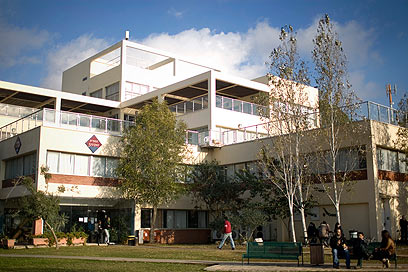
המרכז האוניברסיטאי באריאל (צילום: AP)
The Ariel Academic Center (AP)

Israel has increased the probability of academic boycotts, after the college for higher education in the settlement of Ariel has been accorded university status. Israeli media reported on Tuesday that members of the "Council for Higher Education in Judea and Samaria" -- the West Bank --  voted by 11 to two to recognise the college of higher education at the Ariel settlement as a university. 
Israel's Council for Higher Education, which regulates the seven universities in the Jewish state, opposed the move. But professor Amos Altshuler, head of the "Council for Higher Education in Judea and Samaria," told public radio: "The law obliges us to ask the advice of the Council for Higher Education, but we are not obliged to follow it." Minister of Education Gideon Sa'ar expressed his support for the move, although he is chairman of the state's Council for Higher Education. The 15-member Judea and Samaria education panel was established in 1997 after the state's council refused to discuss issues involving academics in the territories. The law establishing the council was signed by the commander of the Israel Defense Force's Central Command.
Apart from Gideo Sa'ar, Yuval Steinitz (finance) -- also expressed his support for the move. He said he had some 'special funds' reserved for it. Leftists, Arab Israelis and several universities oppose it, citing the risk of an international boycott targeting Israeli universities in general.
The recognition as a university must still be ratified by the army, which is the highest authority in the West Bank. That, however, is thought to be a formality.  Set up in 1982 as an annex to Bar Ilan University, Ariel has 21,000 students in four faculties (medicine, engineering, natural sciences and social sciences) and also has at its disposal architecture and telecommunications facilities.