Showing posts with label BDS. Show all posts

Wednesday, June 19, 2019

Hundreds of Jewish scholars protest resignation director Jewish Museum Berlin

A group of 45 academic Talmud scholars has signed a letter in support of Peter Schäfer, the former director of the Berlin Jewish Museum who resigned last week amid criticism of a tweet linking to a pro-Israel boycott story.
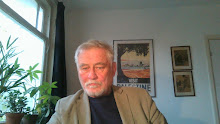
Prof. Peter Schäfer
Such a letter is unprecedented among the Talmudist community, which  tends to shy away from commenting on current affairs, said Ishay Rosen Zvi, a Talmud professor at Tel Aviv University who co-organized the letter with a Princeton University Talmud professor, Moulie Vidas.
A separate letter signed by a broader group of Jewish studies scholars protested “that the reputation of a scholar devoted to Judaism would be smeared in public.” That letter has 300 signatures.
The Talmudists’ letter states that all its signatories, who hold a range of views on Israel and the movement to boycott it, are “united in our profound admiration for Prof. Schäfer.” It calls him “one of the main pillars in the field” of Talmudic studies.

Wednesday, January 13, 2016

Pension fund of American Methodist Church put Israeli banks on a blacklist

The pension fund of the American United Methodist Church declared the five largest Israeli banks off limits for investment and has divested from the two that it held in its portfolios, due to their deep involvement with financing illegal settlement building in the occupied Palestinian territories.
Sign on a wall in Bethlehem, (Photo AFP)
 
The fund, called the General Board of Pension and Health Benefits, excluded Bank Hapoalim, Bank Leumi, First International Bank of Israel, Israel Discount Bank, and Mizrahi Tefahot Bank, according to the pension board's website.
It is  a succes for the Boycott, Divestment, and Sanctions movement, It acknowledges the deep connections between Israeli banks and the settlement enterprise. In effect, it is an acknowledgment that responsibility for ongoing abuses of Palestinian rights does not stop at the Green Line.
The Church is sure to face intense backlash for this decision - especially given that in just 5 months, the Church will consider divestment from Caterpillar, Motorola Solutions, and Hewlett Packard at their General Conference.

Tuesday, April 28, 2015

US Congress moves to make BDS illegal en put pressure on EU

The finance committees of the U.S. House and Senate have approved amendments to a trade bill that equate boycotts of West Bank settlement products with boycotts of Israel, strengthening efforts by the Israeli right to silence opponents of West Bank settlements. Both committees approved the amendments unanimously. Each committee then approved its version of the trade bill on a split vote, with Republicans in favor and Democrats divided for and against.
The nearly identical amendments require U.S. trade negotiators to “discourage politically motivated actions” by foreign countries and international organizations that aim to “penalize or otherwise limit” commercial relations with Israel or “persons doing business in Israel or in territories controlled by Israel.” The Senate Finance Committee took its action on Wednesday evening and the House Ways and Means Committee

Saturday, February 14, 2015

Some 700 British artists announce cultural boycott of Israel

Some 700 British artists, inlcuding writers, filmmakers, actors and musicians, have anounced that from now they will boycott Isarel culturally, will not perform there, not cooperate wityh cultural Israeli institutions and not accept fundings. In the British newspaper The Guadrian the wrote:

.... we are announcing today that we will not engage in business-as-usual cultural relations with Israel. We will accept neither professional invitations to Israel, nor funding, from any institutions linked to its government. Since the summer war on Gaza, Palestinians have enjoyed no respite from Israel’s unrelenting attack on their land, their livelihood, their right to political existence. “2014,” says the Israeli human rights organisation B’Tselem, was “one of the cruellest and deadliest in the history of the occupation.” The Palestinian catastrophe goes on.

Thursday, February 6, 2014

Largest Dutch pensionfund ABP decides not to divest from Israeli banks

Bank Leumi branch | Oranit Settlement | May 2011 | Photographed by Who Profits
Branch office of Bank Leumi in the settlement Oranit. Bank Leumi has similar offices in settlements around Jerusalem and on the Golan and its daughter (for nearly 90%),  Leumi Mortgage Bank, which provides mortgages for houses in the settlements has a branch in the settlement Nofei Zufim  

The largest pension fund of the Netherlands, ABP (short for Algemeen Burgerlijk Pensioenfonds), announced Wednesday that it does not intend to divest from its investments in Israeli banks. In a press statement it said that it had concluded that they had not done anything contrary to international law or regulations.
ABP has investments in Israel's two largest banks, Bank Hapoalim and Bank Leumi, and Bank Mizrahi-Tefahot. The pension fund's announcement came several weeks after the second largest Dutch pension fund, PGGM, said it was divesting its holdings in Israel's five largest banks.

ABP's statement reads:

Saturday, January 11, 2014

Israeli settlements in Jordan Valley suffer from BDS

APTOPIX Mideast Israel Boycott Hits Home
A Thai worker sits in a back of a truck load with flowers in the fields of the West Bank Jordan Valley Jewish settlement of Petsael. (AP).

NETIV HAGDUD, West Bank (AP) — An international campaign to boycott Israeli settlement products has rapidly turned from a distant nuisance into a harsh economic reality for Israeli farmers in the West Bank's Jordan Valley.
The export-driven income of growers in the valley's 21 settlements dropped by more than 14 percent, or $29 million, last year, largely because Western European supermarket chains, particularly those in Britain and Scandinavia, are increasingly shunning the area's peppers, dates, grapes and fresh herbs, settlers say.
"The damage is enormous," said David Elhayani, head of the Jordan Valley Regional Council, which represents about 7,000 settlers. "In effect, today, we are almost not selling to the (Western) European market anymore.
Israel has played down the impact of the campaign of boycott, divestment and sanctions launched by Palestinian activists in 2005 to pressure Israel to withdraw from occupied lands.

Wednesday, January 8, 2014

Dutch pensionfund PGGM withdraws investments from five Israeli banks

Bank Leumi branch | Oranit Settlement | May 2011 | Photographed by Who ProfitsBank Leumi office in settlement Oranit. (Photo Who Profits)

A new achievement for BDS: the Dutch pension fund company PGGM, one of the largest such companies in the Netherlands with an invested capital of about 150 billion euro, has withdrawn its investments from Israel’s five largest banks because they have branches in the West Bank and are involved in financing construction in the settlements, Haaretz reports. Over the past few months, PGGM contacted Bank Hapoalim, Bank Leumi, Bank Mizrahi-Tefahot, the First International Bank of Israel and Israel Discount Bank and informed them that their ties with the settlements created a problem in view of the opinion issued in 2004 by the International Court of Justice in The Hague about the building of ´´The Wall´´ on the West Bank. In this opinion the Court judged that the settlements in occupied Palestinian territory are illegal and violate Article 49 of the Fourth Geneva Convention, as this article states that the occupying power is not allowed ´´to deport or transfer parts of its own civilian population into the territory it occupies.” The Israeli banks responded that Israeli law doesn’t allow them to cease providing service to entities connected to the settlements. Nor, given the daily reality in which the banks operate, would this even be feasible, according to Haaretz.

Wednesday, July 18, 2012

Academic center in Israeli settlement Ariel gets university status

המרכז האוניברסיטאי באריאל (צילום: AP)
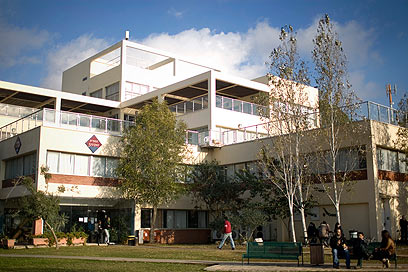
The Ariel Academic Center (AP)

Israel has increased the probability of academic boycotts, after the college for higher education in the settlement of Ariel has been accorded university status. Israeli media reported on Tuesday that members of the "Council for Higher Education in Judea and Samaria" -- the West Bank --  voted by 11 to two to recognise the college of higher education at the Ariel settlement as a university. 
Israel's Council for Higher Education, which regulates the seven universities in the Jewish state, opposed the move. But professor Amos Altshuler, head of the "Council for Higher Education in Judea and Samaria," told public radio: "The law obliges us to ask the advice of the Council for Higher Education, but we are not obliged to follow it." Minister of Education Gideon Sa'ar expressed his support for the move, although he is chairman of the state's Council for Higher Education. The 15-member Judea and Samaria education panel was established in 1997 after the state's council refused to discuss issues involving academics in the territories. The law establishing the council was signed by the commander of the Israel Defense Force's Central Command.
Apart from Gideo Sa'ar, Yuval Steinitz (finance) -- also expressed his support for the move. He said he had some 'special funds' reserved for it. Leftists, Arab Israelis and several universities oppose it, citing the risk of an international boycott targeting Israeli universities in general.
The recognition as a university must still be ratified by the army, which is the highest authority in the West Bank. That, however, is thought to be a formality.  Set up in 1982 as an annex to Bar Ilan University, Ariel has 21,000 students in four faculties (medicine, engineering, natural sciences and social sciences) and also has at its disposal architecture and telecommunications facilities.

Thursday, October 27, 2011

New victory for BDS, Alstom looses contract bid in S-Arabia

 Jerusalem light rail

The BDS National Committee (BNC) has declared a long sought-after victory as Alstom lost the bid for the second phase of the Saudi Haramain Railway project, worth $10 billion US dollars, after pressure from the global Boycott, Divestment and Sanctions (BDS) campaign. In 2008 the BNC, the largest Palestinian civil society coalition, with partners in Europe and Israel, launched the Derail Veolia and Alstom campaign, due to the two companies’ involvement in Israel’s illegal Jerusalem Light Rail (JLR) project, which explicitly aims to “Judaize Jerusalem,” according to official Israeli statements, by cementing Israel’s hold on the illegal colonial settlements built on occupied Palestinian land in and around Jerusalem. Since then, Veolia has lost more than $12B worth of contracts following boycott activism in Sweden, the UK, Ireland and elsewhere. Alstom, too, suffered substantial blows when the Swedish national pension fund AP7 excluded it from its investment portfolio, after having been excluded from the Dutch ASN Bank due to the company’s involvement in Israel’s occupation of Palestinian land, and has recently announced its intention to withdraw from the project. The decision is in line with a decision adopted by consensus at the Arab Summit held in Khartoum in 2006 which condemned in the JLR project and called on “the two French companies [Alstom and Veolia] to immediately withdraw from the project,” and demanding that punitive measures be taken against them “if they don’t comply.” In 2009, BNC member organizations, Stop the Wall and the Civic Coalition to Defend Palestinians’ Rights in Jerusalem, have produced in-depth research about Alstom’s involvement in Israel’s illegal JLR project. Copies were sent to Saudi officials, prompting Palestinian leaders to address Saudi authorities urging them to exclude Alstom from their contracts. Jamal Juma’a, Stop the Wall coordinator and BNC Secretariat member commented on the news saying: “This huge victory will be celebrated in the BDS campaign worldwide. We are hopeful that this will be the first of many decisions to kick Alstom out of the Arab world and beyond, sharply raising the price of its collusion in Israel’s violations of Palestinian rights.”

Sunday, October 31, 2010

Caterpillar suspends shipment of D9 bulldozers to Israel

According to Sydney Levy of the Jewish Voice for Peace (JVP) the Israeli press is reporting that Caterpillar is withholding the delivery of tens of D9 bulldozers—valued at $50 million—to the Israeli military. The D9's are weaponized bulldozers that are used to destroy homes and orchards of Palestinian families. They are the same bulldozers as the one that killed Rachel Corrie, a 23-year-old American peace activist, seven years ago when she tried to protect the home of the Nasrallah family in Gaza.
That's why the next part of the story is even more amazing. The news reports say that the deliveries have been suspended  because Rachel's parents, Cindy and Craig Corrie, are bringing a civil suit against the government of Israel in a court in Tel Aviv. (for more reports on the trial click here). The deliveries are to stop during the length of the trial. JVP takes this as an indirect admission by the company that these bulldozers are being used to violate human rights and to violate the law. The Corrie story is just one of the stories.

A suspension of the sale of bulldozers is what JVP has been asking Caterpillar for over seven years now. Caterpillar and the U.S. government, however,  have neither confirmed nor denied the news. And news reports describe the company's move as a temporary decision only. 
According to the Israeli Committee against House Demolitions (ICAHD), since 1967 almost 25.000 houses have been demolished in the occupied territories, of which at least 11.795 houses in the last ten years. In most of these cases, if not all of them, D9 bulldozers have been used.. 

Thursday, September 30, 2010

University of Johannesburg rejects boycot of Ben Gurion Uni, but not completely

University of Johannesburg

University of Johannesburg professors rejected calls to sever ties with an Israeli university on Wednesday, but called on Ben-Gurion University to work with its Palestinian counterparts, the South African daily Mail and Guardian reports.

Calls for similar academic boycotts to protest Israel's Palestinian policies also have failed in the West.
The South African university's faculty senate met on Wednesday to vote on the proposal, which had been endorsed by anti-apartheid icon Archbishop Desmond Tutu, but instead accepted a compromise without a vote. They asked Ben-Gurion University to work with Palestinian universities on research projects, and to start the collaborations within six months if it wanted to maintain ties with the University of Johannesburg.
UJ Vice-Chancellor Adam Habib said the compromise reflected his institution's values.
"We believe in reconciliation," Habib said. "We'd like to bring BGU and Palestinian universities together to produce a collective engagement that benefits everyone."
The universities have joint research projects and academic exchanges on biotechnology and water purification.
Relations between Ben-Gurion University and Rand Afrikaans University, a formerly all-white university under South Africa's apartheid system, began in 1987. The University of Johannesburg, created in 2005, took over various campuses including Rand Afrikaans University and a university in the black township of Soweto as part of efforts to ensure higher education was transformed with the rest of South Africa after the end of apartheid.
Israel officially opposed apartheid, but its ties with the white government were seen as close. South Africa's post-apartheid government has been a sharp critic of Israel's Palestinian policies. The late Palestinian leader Yasser Arafat was among the guests at Nelson Mandela's 1994 inauguration as South Africa's first black president.
Tutu and more than 200 prominent South African academics had supported ending UJ's links with the Israeli institution.

Saturday, September 25, 2010

Tutu, Breytenbach, Boesak call for end of J'burg Uni ties with university Beer Sheba

Archbishop Desmond Tutu, Unisa vice-chancellor Barney Pityana and author Breyten Breytenbach have added their voices to calls for the University of Johannesburg to sever academic ties with Israel's Ben-Gurion University of the Negev.
The cooperation between the two universities dates from the 1980s, when the local partner was called Rand Afrikaans University. The agreement now under fire involves scientific interaction and was signed in August last year, renewing a controversial apartheid-era collaboration, its critics say.
On Wednesday next week UJ's senate will hear recommendations on the future of the university's ties with Ben-Gurion.
The Mail & Guardian reported in May that the senate had debated the matter then and had asked a senate subcommittee headed by deputy vice-chancellor Adam Habib to make recommendations within three months.
online petition launched after the May senate meeting. It calls for "the suspension of UJ’s agreement with Ben-Gurion" and this week had notched up nearly 200 signatories.
Law professor John Dugard, theologian Allan Boesak, ANC stalwart Kader Asmal, struggle veteran and language-rights expert Neville Alexander, poet Antjie Krog, former Freedom of Expression Institute director Jane Duncan and Wits University sociologist Ran Greenstein are among other recent additions to the petition.

Friday, July 9, 2010

BDS is growing

 The trend towards BDS of Israel is gaining momentum. After artists like Elvis Costello and the Pixies called off tours of Israel and after boycott actions  in ports in California and Norway, more actions are emerging. The trade unions at the Kochi port, the former Cochin, one of the main ports of India,  decided to boycott Israeli ships and cargo, a decsion which may affect Indo-Israeli trade. The unions, comprising those affiliated to the Left parties, the Indian National Trade Union Congress and the Bharatiya Mazdoor Sangh, took the decision at a meeting on Wednesday. After India ended its long diplomatic freeze with Israel in the 1990s, trade has steadily increased. Imports include machinery and engineering goods, solar equipment and raw materials used in tyre manufacture.

At the meeting, the union leaders condemned Israel's recent attack on an aid flotilla to Gaza, killing several activists. The attack at sea had drawn worldwide criticism, the speakers said. In a statement, they said Israel should lift the inhuman embargo and end the atrocities.

A British children’s educational movement has voted to boycott Israel at their annual gathering in Sussex.The Morning Star reported that the Woodcraft Folk, which runs weekly sessions for children including singing, dancing, craft and eco-projects, voted for the boycott at their conference in Ashdown Forest, west Sussex.
The emergency motion was proposed by international secretary Paul Bemrose, who said it had been prompted by the deaths of nine Turkish activists on the Gaza flotilla. A majority of the 150 delegates at the conference backed a complete boycott until the Gaza blockade is lifted.

The film star Meg Ryan (picture) stayed away from the Jerusalem Film Festival this year, follwing the raid on the Free Gaza Flotilla. Meg Ryan cancelled an existing agreement with the festival, shortly after the attack on the ships. With Dustin Hoffman negotiations that were still underway were broken off after the nine Turks got killed in the attack on the Mavi Marmara.  

Wednesday, June 30, 2010

British Methodists ban products from Israeli settlements

The Methodist Church today voted to boycott all products from Israeli settlements in Palestinian territories becoming the first major Christian denomination in Britain to officially adopt such a policy.The decision was made at the church’s Conference in Portsmouth, an annual gathering which decides Methodist policy.
The official stance of the church, the fourth largest Christian denomination in Britain, will be to boycott any products made on Jewish settlements on the West Bank. Lay Methodists will also be encouraged to follow the church’s lead.
The move will inevitably put Methodists on a collision course with Britain’s Jewish community. The Board of Deputies of British Jews had already expressed concern over a 50-page report which had been compiled by a Methodist committee and sent to all its churches before the conference explaining why a boycott was justified.

Friday, April 9, 2010

Egyptians withdraw from film festival because of Israeli film


The sixth annual short-film festival at the French Cultural Center in Cairo (CFCC), "Recontres de l'Image," started out with 49 screenings. That number has dropped to 17 after the jury, composed of three Egyptian directors and actors, withdraw their participation and a number of Egyptian short films followed.
The reason was the inclusion of the film Almost Normal, directed by Keren Ben Raphael, an Israeli director who studies at the prestigious French cinema school La Fémis. The seven-day program for the festival had already been distributed when Ahmed Atef, a film critic, director and jury member resigned two weeks ago after discovering that one of the participants was Israeli. Atef issued a statement outlining his position. He received the complete support of the Cinema Syndicate. "The participation of a film by an Israeli filmmaker is completely unacceptable,” said Shoukry Abu Emiera, the secretary general of the Cinema Syndicate. “Any Egyptian artist who travels to Israel or participates in an Israeli production--given the atrocities that Israel commits on a daily basis--is boycotted by the syndicate."
 Jean-Pierre Debaere, dircto of the CFCC, trie to save the estibval by announcing that the “offending” film would be withdrawn, but was overruled by the  French Ministry of Foreign Affairs, which said it was  “inconceivable not to screen this film because of the director’s nationality.”
Almost Normal tells the story of Shai, an Israeli boy in Tel Aviv who is about to turn 12 and wishes for a normal birthday, which is tainted every year by the anniversary of his grandfather's death.

Other Israeli movies had been screened at the center before and were never stigmatized like this short film.
The Wall, by French-Israeli director Simone Bitton about the erection of the wall that separates Israelis and Palestinians was screened at the CFCC in 2006 and 2007. Abraham Segal’s documentary La Politique de Dieu (God’s Politics), was shown in 2008. These two full-length films produced by Israelis did not cause a stir when they were screened at the CFCC. But since Ahmed Atef resigned from the jury, the decision to boycott the CFCC's festival has snowballed. Asser Yassin, a young Egyptian actor, assured that his decision to leave the arbitration committee was not influenced by the Cinema Syndicate. “It has nothing to do with Keren Ben Raphael’s nationality. I left the jury because I discovered on her CV that she served in the Israeli army, which I consider a terrorist organization,” he said.

Wednesday, March 31, 2010

Tuesday, November 17, 2009

Palestinian BDS movement asks Gulf states to boycott firms that work on Jerusalem light rail

Light Rail bridge in West Jerusalem built by Spanish architect Santiago Calatrava. The bridge is part of the light rail system that is to run partly through occupied territory. Under: carriage delivered by Alstom.


The Boycott, Divestment and Sanctions (BDS) movement in Palestine, a grouping of Palestinian civil society organisations, has turned its focus on the Gulf Cooperation Council (GCC), which is preparing to build a multi-billion dollar railway to link its six members.
The BDS campaign has called on the GCC and its member states to shun French transport giants Alstom and Veolia, both of which are involved in the construction of the Jerusalem Light Rail (JLR), an Israeli project that is expected to link the eastern and western parts of Occupied Jerusalem as well as Jewish colonies on the West Bank.


The BDS campaign has proven successful in Europe, where companies have excluded the two transport companies from tenders and divested from them, leading to a loss of $7 billion to $8 billion in opportunity cost, according to campaigners. 'Despite these important achievements in the West, no Arab state, especially in the Gulf, has to date excluded Alstom or Veolia from bidding for their public contracts,' the movement said in a press release. The two companies are facing a lawsuit in France filed by the Palestine Liberation Organisation and a French advocacy group, Association France-Palestine Solidarité for their activities in Occupied Jerusalem.