-
Showing posts with label human rights. Show all posts
Tuesday, November 27, 2018
Egypt creates new human rights watchdog - to protect itself
Egypt has created a new high-powered human rights watchdog agency, but its primary mission isn’t to protect Egyptians from violations. Instead, the body is foremost aimed at protecting the government from allegations of rights abuses and defending it on the international stage.
The new body reflects an attitude of the state under President Abdel-Fattah el-Sissi that sees criticism over human rights as intended to undermine the government and cause instability at a time when it is facing militant threats and trying to rebuild a battered economy.
Officials have already started a campaign against “false rumors” and “fake news” and have in some cases detained those who speak out. At the same time, the government has sought to redefine or broaden human rights, declaring new “rights” to fight terrorism and protect the state. Critics see that as an attempt to legitimize and draw international attention away from alleged abuses by security forces.
“Human rights cannot be divided, nor can some be given priorities over others,” said Nasser Amin, a prominent rights lawyer.
The High Permanent Commission for Human rights does not include any rights activists. Its main members are representatives of the Foreign Ministry, the military, the intelligence agencies and the Interior Ministry, which oversees a police force accused of torture and forced disappearances, claims that are categorically denied by the government.
Wednesday, January 17, 2018
Sentence Bahraini human rights activits Nabeel Rajab widely condemned
![]() |
| Nabeel Rajab |
Human rights groups have roundly condemned a ruling by a Bahraini court to affirm a two-year jail sentence for activist
Nabeel Rajab, saying the verdict "illustrates the corruption" of the kingdom's justice system.
Rajab had been found guilty in July of "spreading rumours and untruthful information" against the government in TV interviews. The verdict was upheld in November, following a legal challenge by Rajab. On Monday, an appeals court affirmed the lower
court verdict, in a decision that was final.
The International Federation for Human Rights (FIDH) on Tuesday urged the Bahraini government to immediately release Rajab, saying he is a political prisoner who had "done nothing"."Nabeel is not only a human rights defender but also a man of
intellectual value. He should not be in jail," Dimitris Christopoulos, president of the Paris-based group, told Al Jazeera.Thursday, August 4, 2016
Iran executed 20 members of Kurdish groups
![]() |
| Attorney General Montazeri |
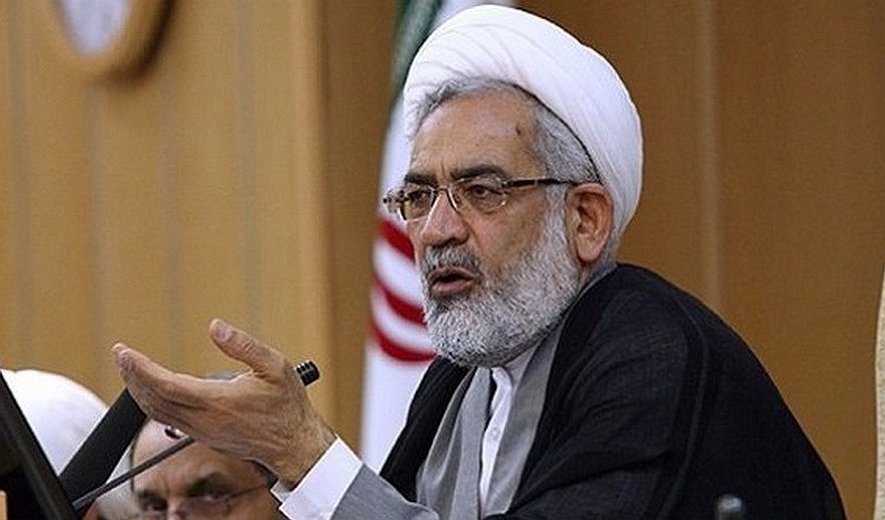
In an exclusive interview with Iranian state run media IRIB, Mohammad
Jafar Montazeri, the Attorney General of Iran, said 20 Sunni prisoners
were executed at Karaj's Rajai Shahr Prison (west of Tehran) on Tuesday
August 2, but he did not mention their identities. Earlier, the
Judiciary in the Kurdistan province had issued a statement about the
execution of a "group of convicts" for membership in "Sunni militant
groups". The statement did not mention the number of executions or the
identities of the prisoners. Iran Human Rights is further investigating
these executions and will be publishing an updated report.
Tuesday, July 5, 2016
Amnesty: Abductions, torture and killings around Aleppo and Idlib
Armed groups operating in Aleppo, Idlib and surrounding areas in the north of Syria have carried out a chilling wave of abductions, torture and summary killings, said Amnesty International in a new briefing published today.
The briefing ‘Torture was my punishment’: Abductions, torture and summary killings under armed group rule in Aleppo and Idleb, Syria offers a rare glimpse of what life is really like in areas under the control of armed opposition groups. Some of them are believed to have the support of governments such as Qatar, Saudi Arabia, Turkey and the USA despite evidence that they are committing violations of international humanitarian law (the laws of war). It also sheds light on the administrative and quasi-judicial institutions set up by armed groups to govern in these areas.
“This briefing exposes the distressing reality for civilians living under the control of some of the armed opposition groups in Aleppo, Idlib and surrounding areas. Many civilians live in constant fear of being abducted if they criticize the conduct of armed groups in power or fail to abide by the strict rules that some have imposed,” said Philip Luther, Director of the Middle East and North Africa Programme at Amnesty International.
Sunday, June 5, 2016
Eight years for human rights defender in S-Arabia
In a hearing which took place on 29 May 2016, the Specialised Criminal Court (SCC) in Riyadh sentenced the Saudi human rights defender Abdulaziz Al-Shubaili to eight years in prison followed by another eight years of a travel ban to start after he serves his sentence. The court also decided that he is not allowed to write any more.
l-Shubaili is a principal member of the Association for Civil and Political Rights in Saudi Arabia ACPRA, who participated in
the defence team on behalf of many of his fellow members of ACPRA. He also used social media networks to call for reform and defend people’s
rights.
Al Shubaili was accused of many charges including publishing a statement calling for demonstrations; accusing judges of dishonesty and human rights violations; and preparing, storing and sending data affecting public order. On top of that he was sentenced for participating in ACPRA, which is an unauthorised association in Saudi Arabia, and his contribution to the drafting of its statements, as well as failing to comply with the judicial decision to dissolve ACPRA.
![]() |
| Abdulaziz Shubaili |
Al Shubaili was accused of many charges including publishing a statement calling for demonstrations; accusing judges of dishonesty and human rights violations; and preparing, storing and sending data affecting public order. On top of that he was sentenced for participating in ACPRA, which is an unauthorised association in Saudi Arabia, and his contribution to the drafting of its statements, as well as failing to comply with the judicial decision to dissolve ACPRA.
Wednesday, February 17, 2016
HRW: Hamas should investigate torture and execution of member of Ezzedin al-Qassam-Brigades
Hamas authorities in Gaza should investigate their military wing for
the apparent torture and execution of Mahmoud Eshtewi. Eshtewi, a member
of that military wing, was detained in secret locations for over a year.
Relatives said they and Eshtewi himself informed the
most senior officials in Hamas’s civilian government that the Izz al-Din
al-Qassam Brigades was torturing Eshtewi, but officials did not
intervene. Family members say one senior Hamas official endorsed the use
of torture.
The Eshtewi case raises serious questions about who’s in charge in Gaza, Hamas’s civilian authorities or its military,” said Sari Bashi, Israel and Palestine director. “Hamas should conduct a genuine investigation into Eshtewi’s death, prosecute those responsible, and shut down any units operating outside the law.”
Human Rights Watch interviewed five relatives, whose names are withheld to protect them, and reviewed photographs of Eshtewi’s body and handwritten notes apparently smuggled out of a detention center. Human Rights Watch also contacted Hamas and hospital officials, but they declined to comment. The evidence supports allegations that Qassam operatives tortured Eshtewi, trampled upon his rights to due process, and may have extrajudicially executed him.
![]() |
| Eshtewi |
The Eshtewi case raises serious questions about who’s in charge in Gaza, Hamas’s civilian authorities or its military,” said Sari Bashi, Israel and Palestine director. “Hamas should conduct a genuine investigation into Eshtewi’s death, prosecute those responsible, and shut down any units operating outside the law.”
Human Rights Watch interviewed five relatives, whose names are withheld to protect them, and reviewed photographs of Eshtewi’s body and handwritten notes apparently smuggled out of a detention center. Human Rights Watch also contacted Hamas and hospital officials, but they declined to comment. The evidence supports allegations that Qassam operatives tortured Eshtewi, trampled upon his rights to due process, and may have extrajudicially executed him.
Saturday, January 2, 2016
S-Arabia executes 47, among them leading Shiite cleric Al-Nimr from Qatif-area
The executed sheikh Nimr al-Nimr. A nephew of Nimr was not executed but still in custody.
Saudi Arabia executed a prominent Shi'ite Muslim cleric and dozens of al Qaeda members on Saturday, signaling it would not tolerate attacks by either sunni jihadists or minority shi'ites seeking equality, but stirring sectarian anger across the region.
Scores of Shi'ite Muslims marched through the Qatif district of Saudi
Arabia's Eastern Province in protest at the execution of cleric Nimr
al-Nimr, an eyewitness said. They chanted "down with the Al Saud", the
name of the ruling Saudi royal family.
But most of the 47 executed in the kingdom's biggest mass
execution for decades were Sunnis convicted of al Qaeda attacks in Saudi
Arabia a decade ago. Four, including Nimr, were Shi'ites accused of
shooting policemen.
The executions took place in 12 cities in Saudi Arabia, four
prisons using firing squads and the others beheading. In December, al
Qaeda in the Arabian Peninsula threatened to retaliate against Saudi
Arabia for any execution of its members. Saudi Grand Mufti
Sheikh Abdulaziz Al al-Sheikh appeared on television soon after to
describe the executions as just. The executions are Saudi Arabia's first in 2016. At least
157 people were put to death last year, a big increase from the 90
people killed in 2014.
Saturday, August 29, 2015
Cairo court sentences Al-Jazeera journalists to three years

Mohammed Fahmy (l) and Baher Mohamed in court (Photo Reuters, April 2015).
A Cairo court has sentenced three Al Jazeera journalists to three years in jail after finding them guilty of "aiding a terrorist organisation".Egyptian Baher Mohamed, Canadian Mohamed Fahmy and Australian Peter Greste were all handed three year jail sentences when the court delivered the verdict on Saturday, sparking worldwide outrage. Mohamed was sentenced to an additional six months for possession of a spent bullet casing.
The journalists had been initially found guilty in June 2014 of aiding a "terrorist organisation", a reference to the Muslim Brotherhood, which was outlawed in Egypt after the army overthrew President Mohamed Morsi in 2013. Judge Hassan Farid, in his ruling on Saturday, said he sentenced the men to prison at least partly because they had not registered with the country's journalist "syndicate".He also said the men brought in equipment without security officials' approval, had broadcast "false news" on Al Jazeera and used a hotel as a broadcasting point without permission.
Tuesday, August 25, 2015
''Saudi Arabia executes 1 person every 2 days, under a justice system that is deeply flawed''

Between August 2014 and June 2015 at least 175 people were put to death – an average execution rate of one person every two days, Amnestu International says in a new report. A third of all executions since 1985 were imposed for offences that do not meet the threshold of ‘most serious crimes’ for which the death penalty may be applied under international law. A large proportion of death sentences in Saudi Arabia – 28% since 1991- are imposed for drug-related offences.
Nearly half - 48.5% - of people executed in Saudi Arabia since 1985 were foreign nationals. Many of them were denied adequate translation assistance during the trial and were made to sign documents – including confessions – that they did not understand. Most executions in Saudi Arabia are carried out by beheading, or in some cases by firing squad. In certain cases executions are carried out in public and the dead bodies and severed heads are put on display afterwards. Often, families of prisoners on death row are not notified of their execution and only learn of their loved one’s fate after they have been put to death, sometimes through media reports.
Thursday, August 20, 2015
''The dangerous terrorist who committed his crimes while he was in jail''

Suhayb Saad with other defendants in cages during their trial (Reuters.)
By Ahmed Aboulenein
CAIRO (Reuters) - Plainclothes Egyptian state security officers pounced on Suhayb Saad as he left a Cairo restaurant in June.
They blindfolded the activist and his two dining
companions, a student and a photojournalist, and drove them away in a
white minivan in what relatives and rights groups describe as enforced
disappearances.
Five weeks later Saad, who officials said was lawfully arrested,
appeared on television, looking dishevelled and weak and confessing to a
role in what the military called a dangerous terrorist cell.
Such detentions and videotaped confessions are a new
feature of a crackdown on dissent launched after the military toppled
Mohamed Mursi of the Muslim Brotherhood in 2013 -- Egypt's first
freely-elected president -- after mass protests, rights groups say.
"His spirit was
broken. They shaved his head. Signs of torture had disappeared but he
talked of being tied up, hung from his hands, and electrocuted," Saad's
brother Osama told Reuters after a prison visit allowed weeks after his
arrest.
Saad is
one of nine young men who friends, family, and rights groups say were
taken by security services and forced to confess on television to crimes
they never committed.
Those friends and fellow activists say he in fact criticised the
post-Arab Spring rule by Mursi's Brotherhood as well as the
military-backed leaders who then outlawed the movement.
The nine are among a wider group of over 160 people who
vanished between April and June, Freedom for the Brave, an Egyptian
rights group documenting the disappearances, said.
Thursday, July 30, 2015
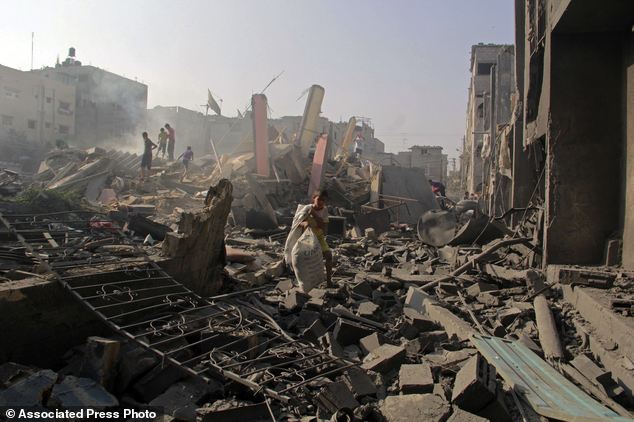
Evidence of war crimes - Amnesty looked into Israel's carnage of August last year in Rafah

Rafah after the Israeli attacks. (Photo AP)
Amnesty Internationale has, together with the London group Forensic Architecture, investigated what happened when during the Operation Protective Edge of last summer in te Gaza-Strip, one of their soldiers was kidnapped on the 1st of Augustus in Rafah and the military got involved in the so called ''Hannibal Directive''. This is one of their conclusisons:
There is overwhelming evidence that Israeli forces committed disproportionate, or otherwise indiscriminate, attacks which killed scores of civilians in their homes, on the streets and in vehicles and injured many more. This includes repeatedly firing artillery and other imprecise explosive weapons in densely populated civilian areas during the attacks on Rafah between 1 and 4 August. In some cases, there are indications that they directly fired at and killed civilians, including people fleeing.
Here follow some excerpts from the summary of their report:
On 1 August 2014 Israel and Hamas agreed to a 72-hour humanitarian ceasefire that would take effect at 8am that day. Three weeks after Israel launched its military offensive on Gaza, thousands of Palestinians who had sought refuge in shelters or with relatives prepared to return to their homes during the anticipated break in hostilities.
In Rafah, the southernmost city in the Gaza Strip, a group of Israeli soldiers patrolling an agricultural area west of the border encountered a group of Hamas fighters posted there. A fire fight ensued, resulting in the death of two Israeli soldiers and one Palestinian fighter. The Hamas fighters captured an Israeli officer, Lieutenant Hadar Goldin, and took him into a tunnel. What followed became one of the deadliest episodes of the war; an intensive use of firepower by Israel, which lasted four days and killed scores of civilians (reports range from at least 135 to over 200), injured many more and destroyed or damaged hundreds of homes and other civilian structures, mostly on 1 August.
Saudi Arabia: More than 100 executions this year
Saudi authorities have carried out 100 executions since January 1, compared with 88 in all of 2014, Human Rights Watch (HRW) reported. Of the 2015 executions, 47 were for nonviolent drug offenses.
“Saudi authorities have been on a campaign of death this year, executing more people in six months than all of the previous year,” said Sarah Leah Whitson, Middle East and North Africa director of HRW. “It’s bad enough that Saudi Arabia executes so many people, but to execute people convicted in nonviolent drug offenses shows just how wanton these executions are.”
The Saudi Press Agency (SPA), Saudi Arabia’s state news agency, said in news releases that only 14 of the 100 prisoners executed so far in 2015 were convicted of Hadd (“limit”) crimes for which Islamic law mandates a specific punishment, including the death penalty, while 30 were sentenced under the Islamic law concept of Qisas, or eye-for-an-eye retribution for murder. Judges based their sentences for the other 56, including the 47 for drug-related crimes, on judicial discretion. Saudi Arabia has no penal code; thus for many crimes for which people are convicted, what constitutes a crime, the proof required to prove it, and the sentence it carries are entirely up to a judge to decide.
Saturday, July 25, 2015
Tunisia adopts draconian anti-terror law
The Tunisian parliament adopted a new anti-terror law overnight Friday
aimed at beefing up powers to confront a jihadist threat following
deadly attacks but which has been slammed by rights groups as draconian. The law was adopted after three days of debate by 174 members of
parliament with ten abstentions and no votes against, according to an AFP tally.
The new legislation comes after a gunman massacred 38 tourists on a Tunisian beach in an attack claimed by Islamic State group (IS) on June 26. In March an attack on the Bardo museum in the capital Tunis that was also claimed by IS left 21 tourists dead.
The law replaces legislation from 2003 which was adopted under the dictatorship of Zine El Abidine Ben Ali and rights groups say was largely used to crush dissent, in particular then-banned Islamist party Ennahda, which today is one of the main players in Tunisian politics.
While the law was widely supported by both secular and Islamist parties, it has been strongly criticised by rights groups and NGOs.
"This law poses a real threat to rights and liberties in Tunisia," said Amna Guellali, the Human Rights Watch representative in Tunis.
Criminal lawyer Ghazi Mrabet agreed the law was a bad sign, saying: "You can't fight terrorism with regressive reforms."
Critics have condemned the fact the law brings back capital punishment for a number of offences, after a de facto quarter-century moratorium on executions. The death penalty can apply to anyone who "knowingly murders someone enjoying international protection", a reference to people such as diplomats and international civil servants. Another article refers to people who commit rape during the course of a terrorism-related crime.
Tuesday, June 16, 2015
Cairo court confirms death sentences Muslim Brotherhood leaders

Leaders of the Muslim Brotherhood in better days. From left Saad el-Katatny, Mohammed Rashed el-Bayoumi, Mohammed Morsi and Essam el-Erian.
Cairo Criminal Court upheld a death sentence against former President Mohamed Morsi and five others on Tuesday for a mass prison break in 2011. The five others are Muslim Brotherhood Supreme Guide Mohamed Badie, Saad al-Katatny, Essam al-Erian, Mohamed Rashad Bayoumi and Mohie Hamed. Apart from tht the ourt handed 20 life sentences to prominent Brotherhood leaders, including Safwat Hegazy, Sobhi Saleh, Mohamed al-Beltagy and Saad al-Hosseini. Sixteen defendants were sentenced to two years, 94 death sentences were upheld in absentia, eight defendants were handed two years in absentia, and one was given three years in absentia.
The death sentences were originally issued in May, and according to state-owned Al-Ahram newspaper can still be appealed.
Morsi and 16 others were also sentenced to life in prison earlier on Tuesday for espionage. A life sentence under Egyptian law is 25 years.
The court also sentenced prominent Muslim Brotherhood leaders Khairat al-Shater, Mohamed al-Beltagy and Ahmed Abdel-Aty to death by hanging, along with 13 others in absentia. Two other defendants were given seven-year prison sentences.
Wednesday, June 10, 2015
Egypt: 163 persons ''disappeared'' in last two months alone
At least 163 people have been forcibly disappeared and illegally
detained by security forces in the past two months alone, according to a
document published by the Freedom for the Brave campaign on its official Facebook page.
According to the group’s breakdown of these cases, 66 activists have gone missing in this time period, and their whereabouts are still unknown. Another 64 people were only located after they had been detained without charges or interrogation for more than 24 hours in an undisclosed location, in violation of the Constitution. Another 31 cases cited in the document have not yet been verified by the group.
At least two of the people included in the list were allegedly killed by security forces, including Ain Shams University student Ismail Atito and Sinai resident Sabry al-Ghoul.
Islam Atito
Tuesday, March 31, 2015
US lifts suspension of military aid to Egypt
![]() |
| Photo AP |
The funds were suspended 21 months ago after the ouster of president Mohammed Morsi. Washington could not provide the annual aid package until it certified advances by el-Sisi's government on democracy, human rights and rule of law, or issued a declaration that such aid is in the interests of U.S. national security. Now that Egypt demonstrates to what extend it is combatting the extremist threat in the region, the U.S. will be sending 12 F-16 fighter jets, 20 missiles and up to 125 tank kits, while continuing the $1.3 billion in military assistance for Egypt and the f unds so far upheld, according to Al Ahram Online.
Monday, February 23, 2015
'Five years for Alaa Abdel Fattah

Abdel Fattah in court. in November 2014 (Photo: Reuters).
Egypty again demonstrated that is has become one of the most repressive states on earth. Renowned activist Alaa Abdel Fattah, who faced trial alongside 24 others, was sentenced to five years of maximum security prison by a Cairo court on Monday, in his retrial for charges of illegal assembly.
Osama al-Mahdy, Abdel Fattah's lawyer said today's verdict is considered a preliminary one, since the initial verdict was handed in absentia. "We will appeal at the Court of Cassation," he said, adding that this court will decide whether to uphold the verdict or order a retrial.
Another defendant, Ahmed Abdel Rahman was handed the same prison term of five years.
The court handed 18 other defendants three year sentences. Each of the 20 defendants who attended the session was ordered to pay a fine of 100,000 Egyptian pounds (about € 14.000).
Wednesday, February 4, 2015
Egyptian courts: in one week 183 death sentences and 229 times life imprisonment

Br /> The Cairo Criminal Court sentenced well-known Egyptian activist Ahmed Douma and another 229 defendants to life-in-prison on Wednesday and fined them all LE17 million (US$2.2 million) for involvement in the December 2011 cabinet clashes case.
A life-in-prison verdict carries a sentence of 25 years in jail according to the Egyptian penal code. Some 39 other minors were sentenced to ten years in prison in the same case. All defendants can appeal the verdicts.
Douma, along with 269 others, was accused of possessing bladed weapons and Molotov cocktails, assaulting personnel from the armed forces and the police, torching the Scientific Complex in downtown Cairo and damaging other governmental buildings, including that of the cabinet and the parliament. That woudl have happened on 16 December 2011, when soldiers forcibly dispersed a three-week sit-in against military rule at the cabinet building. At least 18 were killed and hundreds injured in the violence which spanned over five days.
Thursday, January 29, 2015
HRW issues World Report: ''Human rights no luxury but a way to resolve crises

Prisoner in Guantanamo Bay on his way to interrogation The US Senate wrote a damning report about CIA torture, but nobody is persecuted. (Photo Daily Telegraph).
“Human rights violations played a major role in spawning or aggravating many of today’s crises. That is what Executive Director Kenneth Roth of Human Rights Watch said in his introductory essay to the
World Report 2015, HRW's 25th, which was released Today. In it HRW reviews human rights practices in more than 90 countries. According to HRW governments make a big mistake when they ignore human rights to counter serious security challenges. Because protecting human rights and ensuring democratic accountability are key to resolving these crisis.
The rise of the Islamic State (IS or ISIS) is among those challenges that have sparked a subordination of human rights, according to HRW. But ISIS did not emerge out of nowhere. In addition to the security vacuum left by the US invasion of Iraq, the sectarian and abusive policies of the Iraqi and Syrian governments, international indifference to them, have been important factors in fueling ISIS.
Tuesday, January 27, 2015
Female Genital Mutilation: First convictions in Egypt
Human Rights Watch writes: Today an Egyptian court convicted two people
of carrying out female genital mutilation (FGM). These are the first
convictions for FGM since Egypt criminalized the practice in 2008 but
two convictions in seven years aren’t enough in a country with an
endemic FGM problem, and Egyptian authorities must do more to
investigate and prosecute those who carry out the procedure.
In 2013, 13-year-old Sohair al-Batea died following an FGM procedure, yet last November a court acquitted Dr. Raslan Fadl Hallawa and Sohair’s father. The appeals court on Monday reversed that verdict, convicted the doctor for manslaughter, and sentenced him to two years of imprisonment, plus three months for practicing FGM. The father, who brought Sohair to the doctor, received a three-month suspended sentence for taking his daughter to undergo FGM. The doctor's clinic will be closed for one year by court order.
FGM involves the partial or total removal of female genitalia for non-medical purposes. It interferes with the natural functioning of the body and has no known health benefits. The practice may lead to a variety of health consequences, including severe pain, shock, infection, complications during childbirth, as well as long-term gynaecological problems.
Subscribe to:
Posts (Atom)