Friday, January 24, 2014

Four explosions in Cairo kill six people, damage Islamic Museum

the Cairo security headquarters
Building of the Cairo Security Directorate after the blast, (Photo: AhramOnliner/Mai Shaheen).

Update:

On Saturday again a bomb exploded, the fifth after four exposions a day earlier. The bomb exploded near a police academy in Cairo, but made no victims. Meanwhile the group Ansar Bayt al-Maqdis (Supporters of Jerusalem) claimed responsibility for the attacks.This group which has its roots in teh Sinia, also claimed responsibility for the attack in Mansoura in December (see below) that killed 16 people. (end of update)

Four separate bomb attacks in the Egyptian capital Cairo killed at least six people on Friday, just one day before the anniversary of the 25 January uprising.of 2011.
A large blast ripped through a security building in central Cairo early on Friday, killing four and injuring 76 others, according to the health ministry. At least one person was killed when a primitive bomb exploded after being thrown at a police vehicle near a metro station in Giza. A third bomb exploded in Talbiya, near a police station not far from the Giza pyramids, but caused no fatalities. Later on in the afternoon, an explosion near a cinema theater in Giza’s Haram caused at least one fatality.
The explosion at the Cairo Security Directorate in Bab El-Khalk district, which took place at around 6:30am local time and was heard across several parts of the capital,. blew out the windows of the building and stripped off parts of its façade. Interior ministry spokesman Hani Abdel-Latif told state TV that a car bomb might have been used. in the Cairo attack,

South Sudan and rebels sign ceasefire

South Sudan's government and rebels signed a ceasefire on Thursday to end more than five weeks of fighting that divided Africa's newest nation and brought it to the brink of civil war.
U.S. President Barack Obama, U.N. Secretary-General Ban Ki-moon and the U.N. Security Council welcomed the news, but several diplomatic sources in New York said they were worried the killing could continue.
Fighting between troops loyal to President Salva Kiir and those backing the vice president he sacked in July, Riek Machar, erupted in mid-December. Thousands of people have been killed and more than half a million people have fled their homes, prompting the regional grouping of nations, IGAD, to initiate peace talks. More than 70,000 people have sought refuge at U.N. bases around the country after peacekeepers, in an unusual move, opened their gates to them.
The pact is expected to be implemented within 24 hours of the signing, mediators said.

Thursday, January 23, 2014

Rouhani: Iran wants full nuclear deal and seeks investments

Iran's President Hassan Rouhani smiles during a session at the annual meeting of the World Economic Forum (WEF) in Davos January 23, 2014. REUTERS/Ruben Sprich
(Reuters)
 Iran is determined to negotiate a comprehensive deal on its nuclear program with major powers so it can develop its battered economy, President Hassan Rouhani said on Thursday, inviting Western companies to seize opportunities now.
Addressing the World Economic Forum in Davos, Rouhani said Tehran was negotiating with the United States as part of a "constructive engagement" with the world and wanted Washington to back up its words with actions. An interim deal with the United States, Russia, China, Britain, France and Germany (the P5+1) came into force this week. This granted Iran a limited easing of the sanctions in return for temporary constraints on its uranium enrichment and nuclear development. Most sanctions, including a severe squeeze on Iran's access to the international financial system, remain as yet in force and the United States has stressed Western companies should not regard Iran as "open for business".

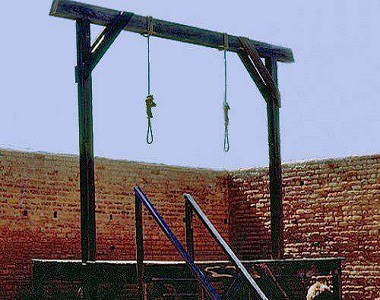
'' In first weeks of January Iran hanged almost 50 people''


Kashan Seven prisoners were hanged in the prison of Kermanshah (western Iran) on Thursday, reported Iran Human Rights quoting Iranian state media. Five of the prisoners were convicted of trafficking of 102 kilograms of various narcotic drugs and two were convicted of murder said the report.  None of the prisoners were identified by name.
According to the official and unofficial reports received by Iran Human Rights near 50 people have been executed in different Iranian cities since the beginning of 2014.
The United Nations Special Rapporteurs on the situation of human rights in Iran, Ahmed Shaheed, and on summary executions, Christof Heyns, on 22 January called on the Government of Iran to urgently halt the abrupt surge in hangings in the country since the start of 2014.

Gunmen kill five policemen in Egypt's Beni Sueif governorate

Masked gunmen riding motorcycles killed five Egyptian policemen in an attack on a checkpoint south of Cairo on Thursday, the Interior Ministry said.
The attack in the province of Beni Suef, 100 km  south of Cairo, was carried out by men riding two motorcycles, a ministry statement said.They opened fire heavily on the forces at the checkpoint," the statement said. Two policemen were wounded.There was no immediate claim of responsibility for the attack.
Bombings and shootings targeting security forces have become commonplace since Islamist President Mohamed Morsi was deposed by the army last July after mass protests against his rule. The state has declared itself in a war on terror, and declared the Muslim Brotherhood a terrorist group on December 25. The Brotherhood has said it remains committed to peaceful activism.

Tuesday, January 21, 2014

Leader of Houthi's killed on his way to peace talks in Yemeni capital Sana'a

Unknown assailants shot and killed a leader of the Yemeni Shi'ite Muslim Houthi group in Sanaa on Tuesday while he was on his way to attend reconciliation talks in the Yemeni capital, officials at the talks said.
They said the gunmen opened fire on Ahmad Sharafeddin, a former dean of the school of law at Sanaa University. Sharafeddine died on the spot.
It was not immediately clear who was behind the assassination, but another Houthi leader, Abdulkarim al-Khiwani, accused hardline Sunni militants of carrying out the attack.
The Houthi group has fought hardline Sunni Salafis in northern Yemen since October before a ceasefire was reached earlier this month to relocate the Salafis to another city some 250 km (155 miles) away. But clashes have continued in other parts of northern Yemen with tribesmen allied to the Salafis.

Ban Ki Moon withdraws invitation to Iran to attend Syria conference

 
The 'Petit Palace' in Montreux, where the Syria-conference will be held. 

U.N. chief Ban Ki-moon withdrew a last-minute invitation to Iran to attend peace talks on Syria on Monday after the Syrian opposition threatened to boycott this week's conference. Ending nearly 24 hours of confusion that dismayed diplomats who have spent months cajoling Assad's opponents to negotiate. Ban's spokesman said Iran was no longer welcome at the initial day of talks at Montreux, Switzerland on Wednesday.
The opposition immediately withdrew its threat to stay away from the conference known as Geneva-2. We appreciate the United Nations and Ban Ki-moon's understanding of our position. We think they have taken the right decision," Monzer Akbik, chief of staff of the coalition's president, told Reuters. "Our participation is confirmed for 22 January.''
Ban's spokesman has said that he made the invitation to Iran after Iranian officials assured him they supported the conclusion of a U.N. conference in 2012, known as Geneva-1, which called for a transitional administration to take over power in Syria - something neither Assad nor Tehran have been willing to embrace.However, throughout Monday Iranian officials made clear that they were not endorsing that conclusion as a basis for the talks."If the participation of Iran is conditioned to accept Geneva I communique, Iran will not participate in Geneva II conference," Mohammad Khazaee, Iran's ambassador to the UN said. Russia said there was no point in a conference without Iran. It did not immediately react to Ban's change of heart. "Not to ensure that all those who may directly influence the situation are present would, I think, be an unforgivable mistake," Foreign Minister Sergei Lavrov said.

Sunday, January 19, 2014

Syrian National Coalition will attend ''Geneva'', the Islamic Front however rejects the talks


The Yarmouk camp in Damascus, in July 2013. (Reuters). 

The deeply divided Syrian National Coalition finally agreed Saturday to join the international peace conference, saying it wanted to remove Assad from power. The Coalition had been under intense international pressure to attend the conference, which aims to find a way out of the conflict that has killed more than 100,000 people and made millions homeless since March 2011.
The exiled Coalition voted by 58 votes to 14 with two abstentions and one blank vote at a meeting in Istanbul to attend the so-called Geneva II talks. That meant just 75 of the around 120 opposition delegates took part in the secret ballot, in a sign that strong disagreements persist.
 Leader Ahmad Jarba said the umbrella group would be there with the sole aim of removing Assad from power. "The Geneva II negotiation table is a one-way road aimed at achieving all the demands of the revolution... and first and foremost stripping the butcher (Assad) of all his powers," he said.

Howver, the Islamic Front, an alliance of several Islamist fighting forces that represents a large portion of the rebels on the ground, said on Sunday it rejected the talks. Syria's future would be "formulated here on the ground of heroism, and signed with blood on the front lines, not in hollow conferences attended by those who don't even represent themselves," Abu Omar, a leading member of the Islamic Front, said on his Twitter account.It means that even if the talks reach an unlikely breakthrough in the three year old civil war, it will be harder to implement it on the ground.

More than 35 countries will gather in the Swiss cities of Montreux and Geneva on Wednesday for talks on setting up a transitional government to lead the country, in line with a 2012 deal.

The United Nations hopes the talks will bring about a political transition in the country, and US Secretary of State John Kerry said last week that Syria's future had no place for Assad. Syria, however, said in a letter to UN Secretary-General Ban Ki-moon last week that its focus at the peace conference would be on fighting "terrorism.”

More than one third of Egyptians voted for the Constitution

More than 98 percent of voters backed the new Egyptian constitution in a referendum this week, authorities said on Saturday. The results reminds us of the old days of Mubarak, who used to win elections with similar results.  The turnout, however, was below 40%, lower than some officials had expected.
The vote advances a transition plan that army chief General Abdel Fattah al-Sisi unveiled after deposing Islamist president Mohamed Morsi last July following mass protests against his rule. The remaining two stages of this road map are presidential and parliamentary elections.
The "yes" vote was 98.1 percent, and 38.6 percent of eligible voters took part, the head of the Election Committee, Nabil Salib, told reporters. Although below 40% the turnout exceeded the 32.9 percent turnout in a referendum that backed the previous Islamist-tinged constitution under Mursi in 2012.
The new constitution could lead to an outright ban on Islamist parties and strengthens the political grip of the already powerful military establishment.

Saturday, January 18, 2014

''France under president Hollande more than doubled its evictions of Roma people''

Around 150 Roma were forcibly evicted from this informal settlement in Noisy-le-Grand, an eastern suburb of Paris.
Settlement in Noisy-le-Grand, an eastern suburb of Paris, from where Roma were evicted in 2012. (Photo Amnesty International).

 The European Roma Rights Centre and the French League for Human Rights on 14 January published in a joint statement that the French evictions of Roma people have more than doubled in the year 2013 as compared to the previous year. This happened in spite op the fact that president François Hollande before his election at the presidency had denounced the eviction policy of his predecessor Sarkozy.
The two organisations wrote:   

French authorities forcibly evicted more than 21.537 Romani migrants in 2013, more than double the total for 2012. Law enforcement officers carried out 165 evictions affecting almost 19.380 people. There were 22 evictions due to fire, affecting 2.157 Roma.
The figures, gathered by the Human Rights League (LDH) and the European Roma Rights Centre (ERRC), are not comprehensive. Many more Roma may have been affected. In comparison 9,404 Roma were forcibly evicted by authorities in 2012 and 8.455 in 2011, according to data collected by the same organisations.
Forced evictions continued almost everywhere without credible alternative housing solutions or social support. NGOs and various institutions (such as the French Ombudsman) have highlighted that government policy is ignored – an interministerial circular of 26 August 2012, which ordered local authorities to carry out a social assessment of Roma in any eviction - is rarely implemented and superficial at best. It often resembles a population census rather than a real and lasting attempt at social inclusion.

Thursday, January 16, 2014

Netanyahu wants to retain a fourth settlement bloc in negotiations with Abbas

 
Construction in Beit El in February 2013 (Activestills.org). 

According to a report Thursday on Army Radio, Netanyahu has been seeking to define a fourth bloc of Israeli settlements in the West Bank, in the vicinity of Beit El, that Israel would retain in any future agreement with the Palestinians.
The report, which cited an unnamed senior Israeli official involved in the negotiations, harked back to previous reports that the Israeli negotiating team has brought up the option of renting or purchasing land from the Palestinian Authority. The older reports did not specify which swaths of land Israel would seek to retain.
The Prime Minister’s Office declined The Times of Israel’s request for comment.
Located near the Palestinian administrative capital of Ramallah, the Beit El bloc joins three other West Bank areas — the Gush Etzion, Ma’aleh Adumim and Ariel blocs — over which Israel wishes to retain control, even after the signing of a peace agreement. In peace proposals that have been under discussion in the past, , it was proposed that Israel swaps land of an equal proportion to compensate the Palestinians for these territories.
The three blocs, together with the Beit El area, constitute a combined 13 percent of the West Bank.
Netanyahu wants to annex the four blocs but, according to the Israeli source, at this stage opposes compensating the Palestinians with a land swap of equal size and quality. The source added that the Palestinians had rejected the idea that Israel buys or leases some of the lands on which the settlement blocs rest. 

Grave found of unknown Egyptian king of the Abydos dynasty

-An American excavation mission from the University of Pennsylvania uncovered the name of an ancient Egyptian king from the Abydos dynasty during the second Intermediate Period (1650 BC) during routine excavations south of Abydos archaeological site. According to a statement by the Ministry of State of Antiquities (MSA), the name of the king is Sneb-Kay. His name was found on Tuesday engraved on a wall of his tomb.
The discovery shed more light on Abydos local families that ruled the nome during the Second Intermediate Period, considered one of the most critical phases of ancient Egyptian history. Joseph Wagner, head of the American mission, stated that the tomb neighbours the tomb of King Subek Hotep of the 13th dynasty and the newly discovered tomb can be dated to a dynasty called Abydos mentioned by archaeologist K.Rhyholt, although the ruling tenure of the king is still a mystery. He added that the poor state of the tomb shows that Egypt was suffering bad economic conditions.
Ali El-Asfar, head of the ancient Egyptian Section at the MSA, said that the tomb was built with blocks previously used in tombs of the Middle Kingdom. Remains of a wooden sarcophagus still bearing the king's skeleton were also found. The skeleton of Pharaoh Senebkay was originally mummified but his body was pulled apart by ancient tomb robbers.