Showing posts with label Culture. Show all posts

Thursday, April 28, 2016

Palestinian writer Madhoun wins Arabic ''Booker Prize'' 2016

 Madhoun and his book.

Palestinian writer, Rabai Al-Madhoun (70), is the winner of the International prize for Arabic Fiction (the Arabic Booker Prize) for his novel Destinies: Concerto of the Holocaust and the Nakba.
The announcement took place in an Abu Dhabi Hotel. In addition to winning $50,000, Rabai al-Madhoun is guaranteed an English translation of his novel, as well as an increase in sales and international recognition. The book is published by Maktabat Kul Shee (Haifa, Israel).
Al-Madhoun’s family came from Ashkelon, Palestine – now occupied by Israel – but went to the Gaza strip after the 1948 nakba exodus. Leaving Gaza to attend Alexandria University, he later became involved with the Palestinian liberation struggle as a member of the Democratic Front for the Liberation of Palestine.He left activism in 1980 to focus on writing and has written a number of works of fiction and non-fiction. This is the 70-year-old author’s third novel.
His 2010 novel, The Lady from Tel Aviv, was shortlisted for the 2010 International Prize for Arabic Fiction. It was also published in English in 2013 (Telegram Books) and won the English PEN Writers in Translation award that year.

Monday, October 19, 2015

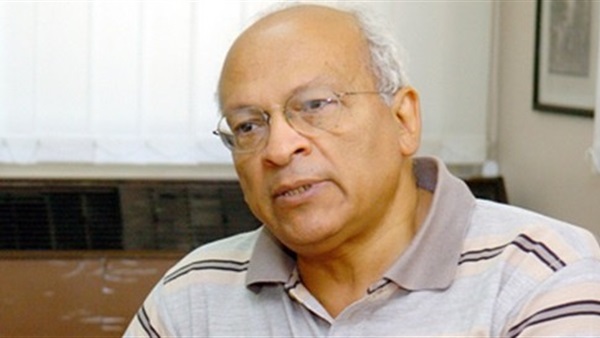
Gamal al-Ghitani 1945-2015

https://arablit.files.wordpress.com/2015/08/ghitani.jpg Gamal al Ghitani.

The famous Egyptian author Gamal al-Ghitany died Sunday in al-Galaa Military Hospital in Cairo. He was 70. Ghitani had been in a coma for two months after he suffered a heart attack in August.
Al-Ghitani was one of Egypt’s best known twentieth-century novelists, author of the well known novel Zayni Barakat, and editor in chief of  one of the leading Arabic literary newspapers, Akhbar Al-Adab, a newspaper he founded in 1993. He remained its editor in chief till 2011.
Al-Ghitani was born in Sohag, in upper Egypt, on 9 May 1945 to a poor family that later emigrated to the Gamaliyya neighbourhood in Islamic Cairo, a neighbourhood that - like in the books of his colleague and friend Naguib Mahfouz - played an important role in many of his books.  He started as a child as a carpetmaker and worked in one of the Khan el-Khalili factories in Cairo, but in 1969 he started his literary career with 'Papers of a Young Guy, who Lived a Thousand Years Ago'. The same year he found work at the news desk of the daily paper Akhbar el-Youm. During the October War of 1973 he worked as a war correspondent between the front lines.

Monday, October 5, 2015

Daesh destroys famous Arch of Triumph in Palmyra

Arch of Triumph, Palmyra, Syria
(Photo Reuters)
Islamic State militants have blown up the Arch of Triumph, a major monument in the 2,000-year-old Roman city of Palmyra, Syria's antiquities chief said on Sunday, after they destroyed two ancient temples at the central Syrian site in recent months.
Maamoun Abdulkarim told Reuters that sources in Palmyra had confirmed that the Arch of Triumph, a jewel in the exquisite collection of ruins in the oasis city, had been blown up.
Islamic State militants have blown up temples at the Roman-era UNESCO World Heritage site, which it has controlled since capturing Palmyra from Syrian government forces in May and mined other monuments and historic buildings. The group considers the buildings sacrilegious.
"It's as though there is a curse that has befallen this city and I expect only news that will shock us. If the city remains in their hands the city is doomed," Abdulkarim told Reuters.

Tuesday, September 1, 2015

IS destroys the 'centerpiece' of the famous ruins at Palmyra

 
The Greaco-Roman temple of Bel at Palmyra before it was destroyed. 
 
The most famed temple in Syria's Palmyra has been blown up, the United Nations said, showing satellite images of the damage as the Islamic State group presses a campaign to tear down the treasured heritage site.
A powerful blast in the ancient city had raised fears the militants had escalated their push to rid Syria of what they view as un-Islamic artifacts after they destroyed the smaller Baal Shamin temple last week."We can confirm destruction of the main building of the Temple of Bel as well as a row of columns in its immediate vicinity," the UN training and research agency UNITAR said, providing satellite images from before and after the explosion on Sunday.The 2,000-year-old Temple of Bel was the centerpiece of Palmyra's famed ruins and one of the most important relics of the heritage site, which has been described by the UN's cultural arm UNESCO as of "outstanding universal value.

Monday, August 24, 2015

IS destroy Roman temple in Palmyra


The Temple of  Baal Shahin before its destruction.

Islamic State militants on Sunday blew up the temple of Baal Shamin, one of the most important sites in Syria's ancient city of Palmyra, said Maamoun Abdul Karim, the country's antiquities chief. The temple bombing would be the first time the insurgents, who control swathes of Syria and Iraq and captured Palmyra in May, damaged monumental Roman-era ruins.
A week ago, the militants beheaded Khaled Asaad, an 82-year-old scholar who worked for more than 50 years as head of antiquities in Palmyra, after detaining and interrogating him for over a month.
Before the city's capture by Islamic State, Syrian officials said they moved hundreds of ancient statues to safe locations out of concern that the militants would destroy them.

Thursday, August 13, 2015

Nour al-Sherif 1946-2015

Nour al-Sherif as the philospher Ibn Rushd in the film Al-Masseer (Destiny) from 1997 by Youssef Chahine.


Egyptian film and television actor Nour El-Sherif died on Tuesday at the age of 70 after a long struggle with illness. El-Sherif, who was born as Mohamed Gaber Abdallah in Cairo’s Sayeda Zeinab neighborhood, starred in around 200 films, 17 plays and more than 20 television series. Among the films were  Ali Badrakhan’s Al-Karnak (The Temple, 1975), Atef El-Tayeb’s Sawaa’ Al-Otobees (The Bus Driver, 1982), which earned him a recognition at New Delhi Cinema Festival, Ali Abdelkhaleq’s Al Aar (Disgrace, 1982), Hadouta Masreya (Egyptian Story, 1982). and Al-Masseer (Destiny, 1997) by Youssef Chahine, and Naji Al-Ali, a movie based on the life of the important Palestinian cartoonist. On televsion he played among other things in several Ramadan series. Al-Sherif was also active as a director of plays and films.

Wednesday, July 22, 2015

University finds one of the oldst copies of the Koran in its library

Koran at Birmingham UniversityWhat may be the world's oldest fragments of the Koran have been found by the University of Birmingham. Radiocarbon dating found the manuscript to be at least 1,370 years old, making it among the earliest in existence. The pages of the Muslim holy text had remained unrecognised in the university library for almost a century.
 The manuscript had been kept with a collection of other Middle Eastern books and documents, without being identified as one of the oldest fragments of the Koran in the world. When a PhD researcher, Alba Fedeli, looked more closely at these pages it was decided to carry out a radiocarbon dating test and the results were "startling". The tests, carried out by the Oxford University Radiocarbon Accelerator Unit, showed that the fragments, written on sheep or goat skin, were among the very oldest surviving texts of the Koran. These tests provide a range of dates, showing that, with a probability of more than 95%, the parchment was from between 568 and 645.

Friday, July 10, 2015

Omar Sharif 1932-2015

Omar Sharif with his wife, the actress Faten Hamama, in Cairo (Photo AFP) 

 Omar Sharif, the famous actor in films like Lawrence of Arabia and Doctor Zhivago, died today Friday 10 July, of a heart attack in a
hospital in Cairo. He was 83. Only a couple of months ago his son Tareq had announced that he was suffering of Alzheimer's disease. Omar Sharif was not only an well known Hollywood star. At the beginning of his career he played in more than 20 Egyptian films, which made him also a darling of the Egyptian audiences.
He was born in Alexandria in 1932 as Michel Demitri Chalhoub, son of a Christian Lebanese family. His father was an importer of wood. He studied physics and mathemathics in Cairo and worked five years with the family business before he began his acting career in 1953 with a role in Sira`fi'l-Wadi (Struggle in the Valley), directed bij Youssef Chahine and with actress Faten Hamama, whom he would marry one year later. For this purpose he had to convert to the Islam. In the meantime he had adopted Omar el-Sharif as his ''nom de guerre''.

Saturday, March 7, 2015

IS destroys another ancient city in Iraq


Fighters of the Islamic State of Iraq and the Levant (ISIL) have bulldozed the ancient city of Hatra, Iraqi officials say. In a statement posted on its website on Saturday, the Ministry of Tourism and Antiquities quoted media outlets about the "looting and destruction of the ruins of the anciety city of Hatra."
Al Jazeera's Jane Arraf, who is reporting from Baghdad, said ISIL fighters used bulldozers to go into the site.
Last Thursday, ISIL fighters also bulldozed the 3,000-year-old Assyrian city of Nimrud.

New 3.500 year old tomb found in Luxor in Egypt

http://www.madamasr.com/sites/default/files/photos/news/11021093_878169835562001_3851034983363553174_n.jpg
Pictures Facebookpage of the Egyptian ministry of Antiquities.  

A team of American archeologists and local laborers uncovered a colorful tomb in Luxor that is thought to date back to Ancient Egypt’s New Kingdom, and is perhaps over 3,500 years old.
The tomb was unearthed on Tuesday 3 March in the archeological site of Al-Qurna in Luxor City (formerly Thebes), over 720 kilometers south of Cairo. It is presumed to have been built for a nobleman or ancient priest in the Cult of Amoun, perhaps also a member of the then-ruling dynasty.
The owner of the tomb has reportedly been identified as “Amenhotep” — not to be confused with the pharaoh of the same name.

Friday, March 6, 2015

IS bulldozes ancient city of Nimrud

Search BiggerIslamic State fighters have looted and bulldozed the ancient Assyrian city of Nimrud in northern Iraq, the government and a local tribal source said.
The destruction at Nimrud came a week after the radical Islamist militants released a video showing them destroying Assyrian era statues and sculptures in the city of Mosul, which they seized in June last year.
Islamic State members came to the Nimrud archaeological city and looted the valuables in it and then they proceeded to level the site to the ground," the tribal source from near Mosul, where ancient Nimrud is located, told Reuters.
Entrance of King Ashurnasirpal II Palace
Entrance of the palace of King Ashurnasirpal II

Thursday, February 26, 2015

IS destroys Assyrian statues in Mosul

 An IS militant appears to push over a statue in Mosul Museum

The Islamic State (IS) group has released a video showing the destruction of statues in Iraq. The video shows statues being smashed using sledgehammers in what appears to be a museum in the city of Mosul.
Statues are also shown being destroyed reportedly at an archaeological site known as the Nergal Gate.
One of the militants in the video describes the artefacts as "false idols" and seeks to justify their destruction in religious terms.
In the video released via IS social media sites, black-clad men push over statues, smash them with sledgehammers and use a pneumatic drill to destroy the rubble.
The video shows a black-clad man drilling through and pulling apart what appears to be a stone winged-bull Assyrian protective deity that dates back to the 9th Century BC.

Saturday, February 14, 2015

Some 700 British artists announce cultural boycott of Israel

Some 700 British artists, inlcuding writers, filmmakers, actors and musicians, have anounced that from now they will boycott Isarel culturally, will not perform there, not cooperate wityh cultural Israeli institutions and not accept fundings. In the British newspaper The Guadrian the wrote:

.... we are announcing today that we will not engage in business-as-usual cultural relations with Israel. We will accept neither professional invitations to Israel, nor funding, from any institutions linked to its government. Since the summer war on Gaza, Palestinians have enjoyed no respite from Israel’s unrelenting attack on their land, their livelihood, their right to political existence. “2014,” says the Israeli human rights organisation B’Tselem, was “one of the cruellest and deadliest in the history of the occupation.” The Palestinian catastrophe goes on.

Friday, January 30, 2015

Clay tablets testify about Babylonian Exile of the Jews

One of the clay tablets on display in the Bible Lands Museum exhibit.

A little known collection of more than 100 clay tablets in Cuneiform script, dating back to the (Jewish) Babylon Exile some 2,500 years ago, was unveiled this week, allowing a glimpse into the everyday life of one of the most ancient exile communities in the world, the newspaper Haaretz reports. Archaeologists could date the tablets to 572-477 B.C.E. The earliest tablet in the collection was written some 15 years after the First Temple’s destruction by Nebuchadnezzar, the Chaldean king of the neo-Babylonian era, who deported the Jews to Babylon. The latest was written some 60 years after the return of some of the exiles to Zion, which was enabled by Persia’s King Cyrus in 538 B.C.E.
Prof. Wayne Horowitz, one of the archaeologists who studied the tablets, says this is the most important ancient Jewish archive since the discovery of the Dead Sea Scrolls.The tablets are on display in an exhibition entitled “By the Rivers of Babylon” that opened this week in the Bible Lands Museum in Jerusalem.
The collection consists mainly of administrative certificates – sales bonds, contracts and addresses, engraved in Akkadian Cuneiform script on clay tablets. Thanks to the Babylonian custom of inscribing each document with the date, corresponding with the monarch’s years in power, the archaeologists could date the tablets to 572-477 B.C.E.

Tuesday, December 2, 2014

Radwa Ashour 1946-2014

37819_411548290673_1094883_n
Radwa Ashour with her husband, Mourid el-Barghouti. Barghouti and Ashour met as students at Cairo University in the 1960s, and he writes about the beginnings of their relationship in his second memoir, I Was Born There, I Was Born Here, trans. Humphrey Davies.

Egyptian writer and academic Radwa Ashour died late on Sunday at the age of 68 after suffering from health troubles over the past few months. Ashour, born 26 May 1946 in Cairo, studied English literature at Cairo University and earned her MA in comparative literature in 1972.  She is best known for her Granada Trilogy, Ashour was married to the Palestinian poet Mourid El-Barghouti and is the mother of the poet Tamim El-Barghouti. In 1977, El-Barghouti was deported from Egypt; she and her son spent a great deal of their lives visiting him in Hungary.

Thursday, September 4, 2014

Improper restauration threatens Egypt's oldest pyramid at Saqqara

 A pirâmide Sakkara tem mais de 4600 anos e localiza-se a cerca de 30 quilómetros da cidade do Cairo (Reuters)
 Egyptian activists have launched an attack against the Minister of Antiquities Mamdouh al-Damaty after assigning a company with the  restoration of Egypt's oldest pyramid at Saqqara. The same company worked on the project till October 2012 and  caused a major deterioration of the pyramid that even caused part of it to collapse, Al-Masry al-Youm reported. 
Amir Gamal, representative of the ‘Non-stop Robberies’ movement, told the paper that the company, called Shurbagy, worked on the Saqqara pyramid until October 2012, at which moment the ministry stopped the restoration due to a lack of funds. Gamal said that Shurbagy has been working for nine years and has not been successful in any of the six projects it has worked on, adding that all are being investigated.

Saturday, August 9, 2014

US bombs positions of the Islamic State and drops food for the Yazidis

 
Outside Arbil airstrikes could be seen. 

U.S. warplanes bombed Islamist fighters marching on Iraq's Kurdish capital on Friday after President Barack Obama said Washington must act to prevent "genocide". The Islamic State fighters have advanced to within a half hour's drive of Arbil, capital of Iraq's Kurdish region and a hub for U.S. oil companies.They have also seized control of Iraq's biggest dam, Kurdish authorities confirmed on Friday, which could allow them to flood cities and cut off vital water and electricity supplies.
The Pentagon said two F/A-18 aircraft from an aircraft carrier in the Gulf had dropped laser-guided 500-pound bombs on the fighters' artillery and other air strikes had targeted mortar positions and an Islamic State convoy.
 The U.S. Defense Department said planes dropped also additional bundles of supplies, bringing the total to 36,224 ready-to-eat meals and 6,822 gallons of drinking water, for threatened civilians near Sinjar, home of the Yazidis. They are ethnic Kurds who practice an ancient faith related to Zoroastrianism. The Islamic State considers them to be "devil worshippers". After fighters ordered them to leave, convert or die, most fled their towns and villages to camp out on Sinjar mountain, an arid peak where they believe Noah settled after the biblical flood.

Monday, July 14, 2014

Nadine Gordimer, writer and outspoken critic of Apartheid, 1923-2014

Nadine  Gordimer
 Nadine Gordimer, South Africa's ''first lady of letters'' and a laureate of the Nobel prize for Literature has died at the age of 90.
Gordimer wrote 15 novels as well as several volumes of short stories, non-fiction and other works. The South African Mail and Guardian mentions that she was published in 40 languages around the world.
  “She cared most deeply about South Africa, its culture, its people, and its on-going struggle to realise its new democracy, '' Her family bsais in a statement.''Her proudest days were not only when she was awarded the Nobel Prize for Literature in 1991, but also when she testified at the Delmas Trial in 1986, to contribute to saving the lives of 22 ANC members.''
Gordimer was an unwavering critic of apartheid and an outspoken advocate of black majority rule, the Guardian and Mail writes. Her fiction, which she saw as part of the struggle against apartheid, documented the havoc that institutionalised racism wrought on private lives. Three of her works were banned by the government for varying periods because of their outspoken messages.

Monday, June 2, 2014

Bassem Youssef's show ''Il-Bernamig'' will not return

Bassem Youssef
Egypt's popular satire show Il-Birnamig hosted by Bassem Youssef will not resume its broadcasts. Youssef made this known in a press conference on Monday.
According to Youssef, the desicion comes after he and his crew realised that it's better to end the show than "offending it". With that he meant that he did not want to compromise it. Like an Egyptian blogger (The Big Pharao) said: ''He could have kissed ass. He could've toned down his show. He could've done what many show hosts do. I am glad he didn't. Respect.''
Another comment, by Michael Hanna, was: ''Egypt keeps sinking.''  And yet another (blogger Zeinobia): "They are afraid that the joker will make fun of the naked emperor.''
Youssef said at the press conference that he and the crew had decided not to accept offers to air the program from outside Egypt.

Thursday, May 15, 2014

Ash-Shidyaq's ''Leg over Leg'' translated

At the occasion of the apearance of a English translation of Ahmad Faris Ash-Shidyaq's As-Saq `ala-s-Saq the Los Angeles Review of Books writes a very positive review. It calls Humphrey Davies' translation, published in four dual-language volumes, ''a triumph'' no less. A-Shidyaq was one of the major literary instigators of Al-Nahda, the “renaissance” or “revival” of Arabic culture in the 1800s. The book was first published in 1855. ''Leg Over Leg'' is now published by the recently established series from NYU Press called The Library of Arabic Literature.
Excerpt from the review in the LARB: